Here we go again: for the fourth consecutive year (and fifth time overall), I journeyed north to the arctic fells of Swedish Lapland to lock horns with this beast of a challenge. It all began in 2006 with my very first running race ever. In 2014, a severe ankle roll forced an early bailout. In 2015, I had my redemption, claiming overall victory and establishing what was then the fastest known time on the route: 11:54:00. In 2016, injury stopped me at 7.5 km, turning me into finish-line crew.
Toeing the line in 2017, I felt decently recovered from my podium at High Coast Ultra 129 km four weeks earlier, though consistent training weeks had still been hard to come by all spring.
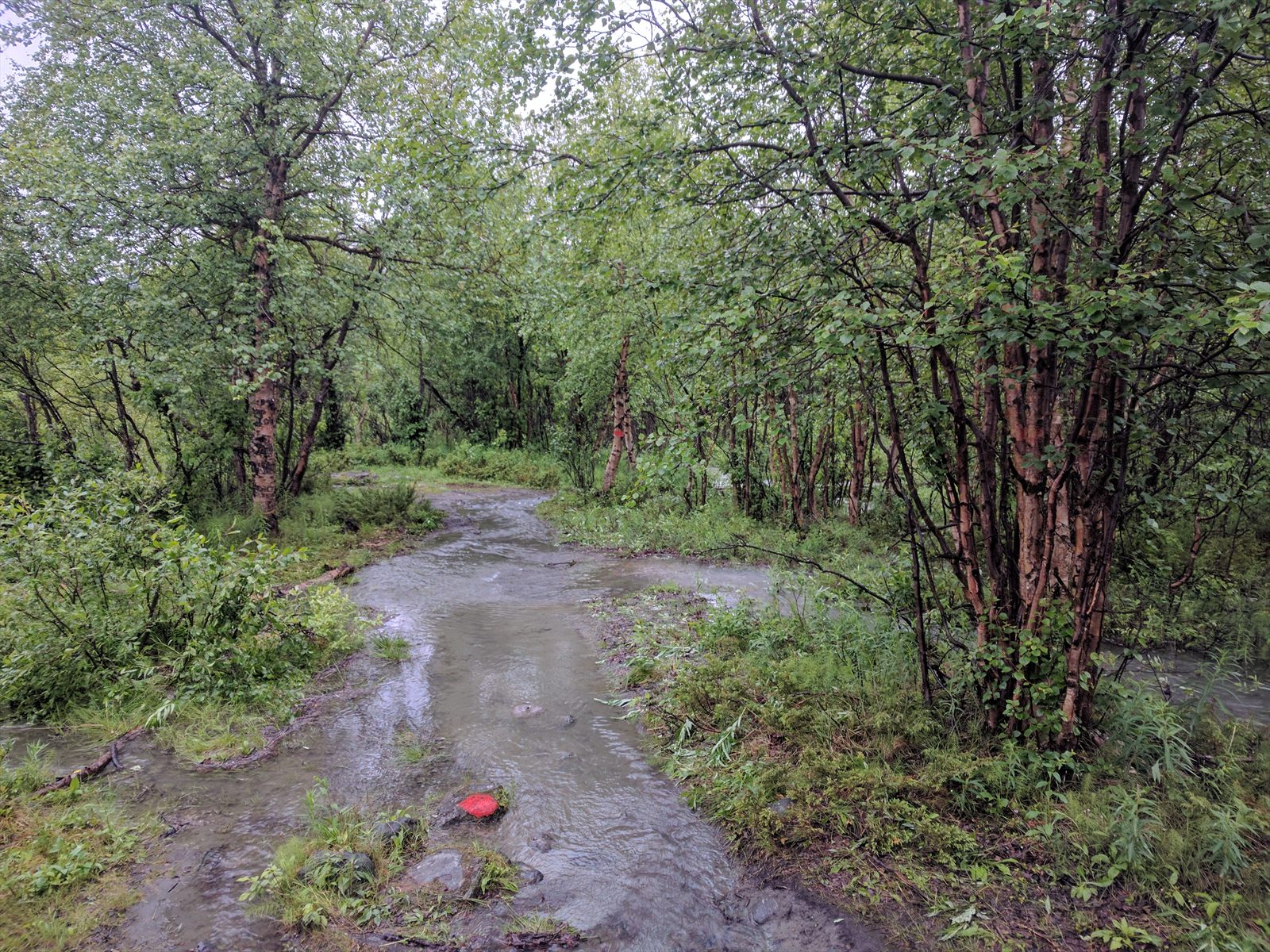
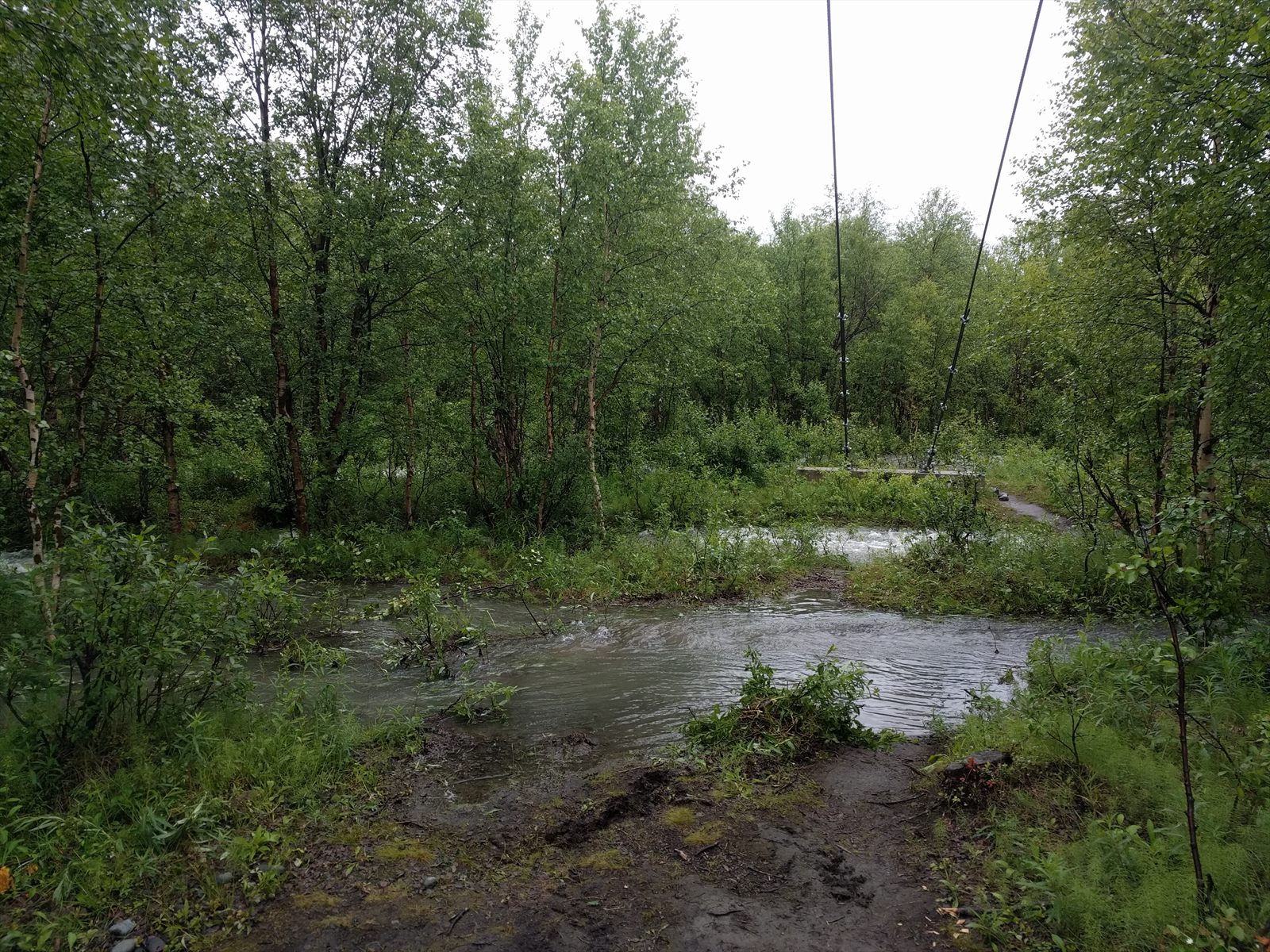
Heavy rain had battered the mountains all week, swelling glacial streams to bursting and triggering late, violent snowmelt. Two days before the race, I jogged a reconnaissance shakedown from Abisko to Abiskojaure—the final stage of the course. The trails were underwater, boggy, and boardwalks were completely submerged, painting a vivid picture of the arctic conditions waiting for us in the high passes.
After wrestling with canceled trains and missed connections, I finally rolled into Nikkaluokta for race director Roland's pre-race briefing in the chapel. He warned of chest-deep fords and deep, treacherous snowpacks across the Tjäktja Pass. I reined in my expectations: match my 2015 splits through Sälka, and only then look to chip away time over the pass and the northern stages. Today had only one rival: myself and the ghost of my 2015 record.
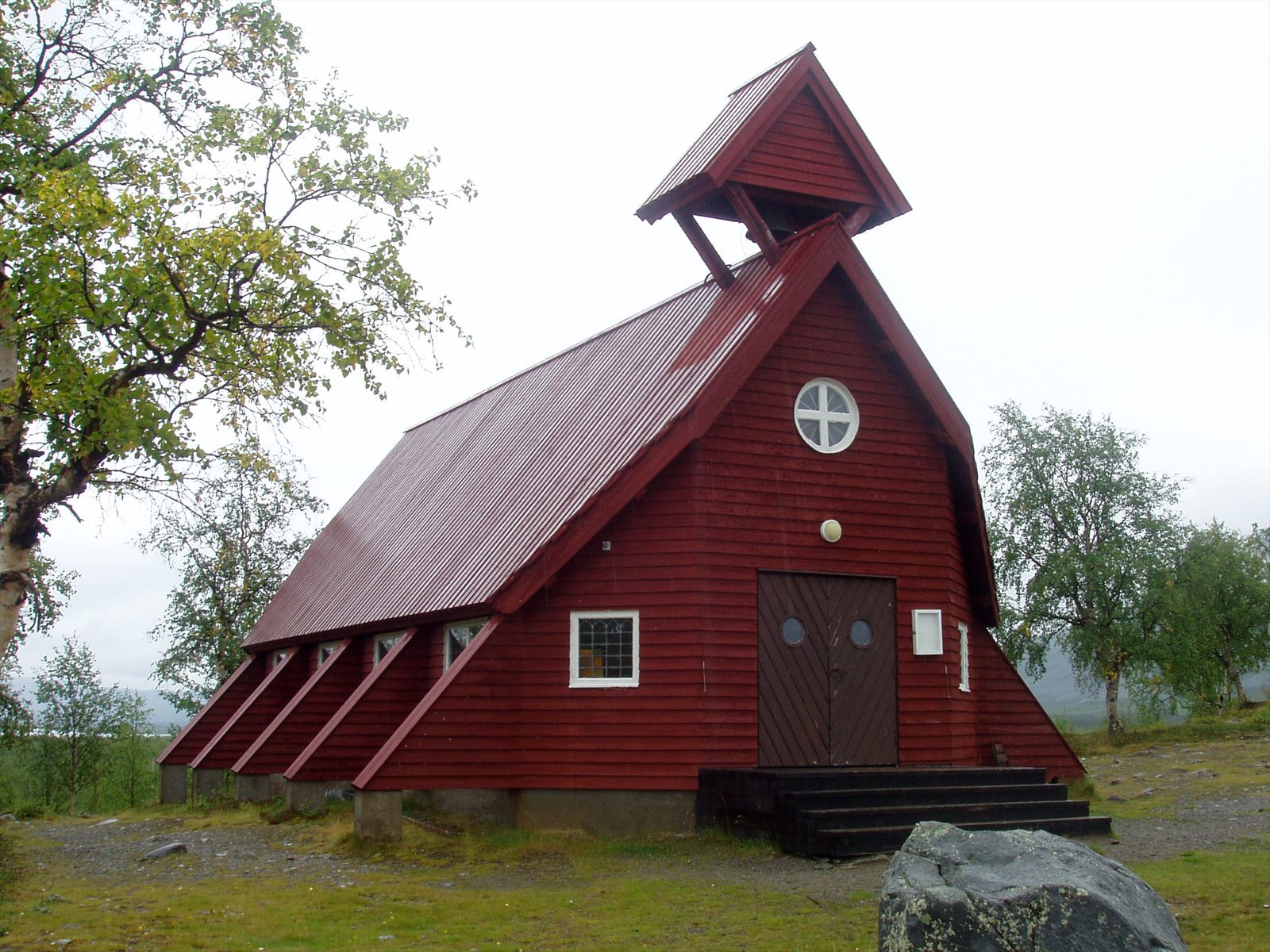
Nikkaluokta (Start)
I woke at 6 AM to glorious sunshine breaking through the clouds. Trail puddles were draining and the mist had lifted off the fells. After a hearty breakfast, it was race time. Today's mantra was simple: ignore anyone else's pace, lock onto my own internal clock, and run my own race.
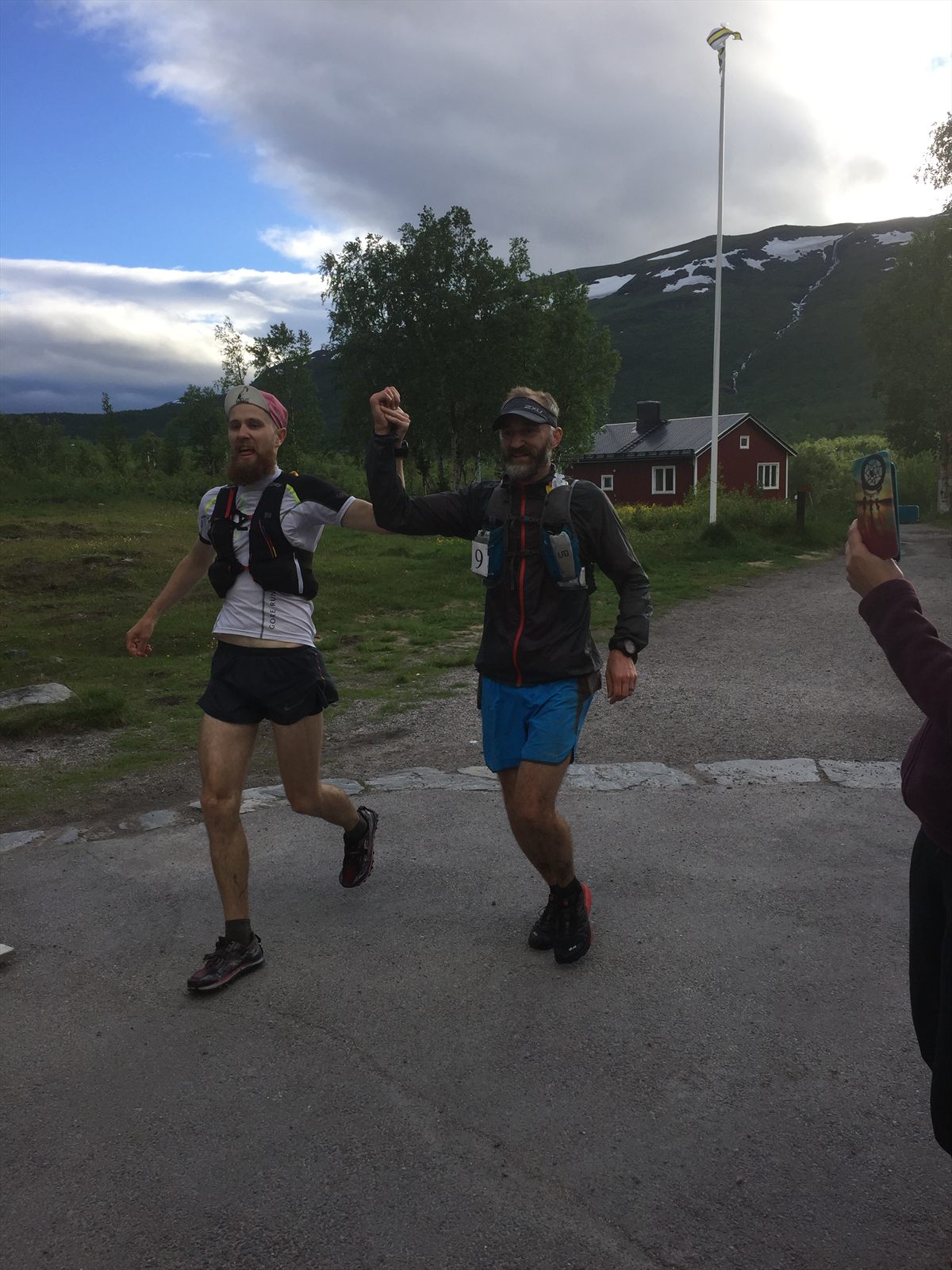
When the gun fired at 08:00, I slotted near the front and was first through the gate onto the trail toward Kebnekaise—a position I would hold for 99% of the day. Glancing back after 200 meters, the only runner locked onto my heels was my brother Tobias, striding with fierce determination. Perfect: no frantic opening sprint, just two brothers setting a smooth, rhythmic mountain tempo.
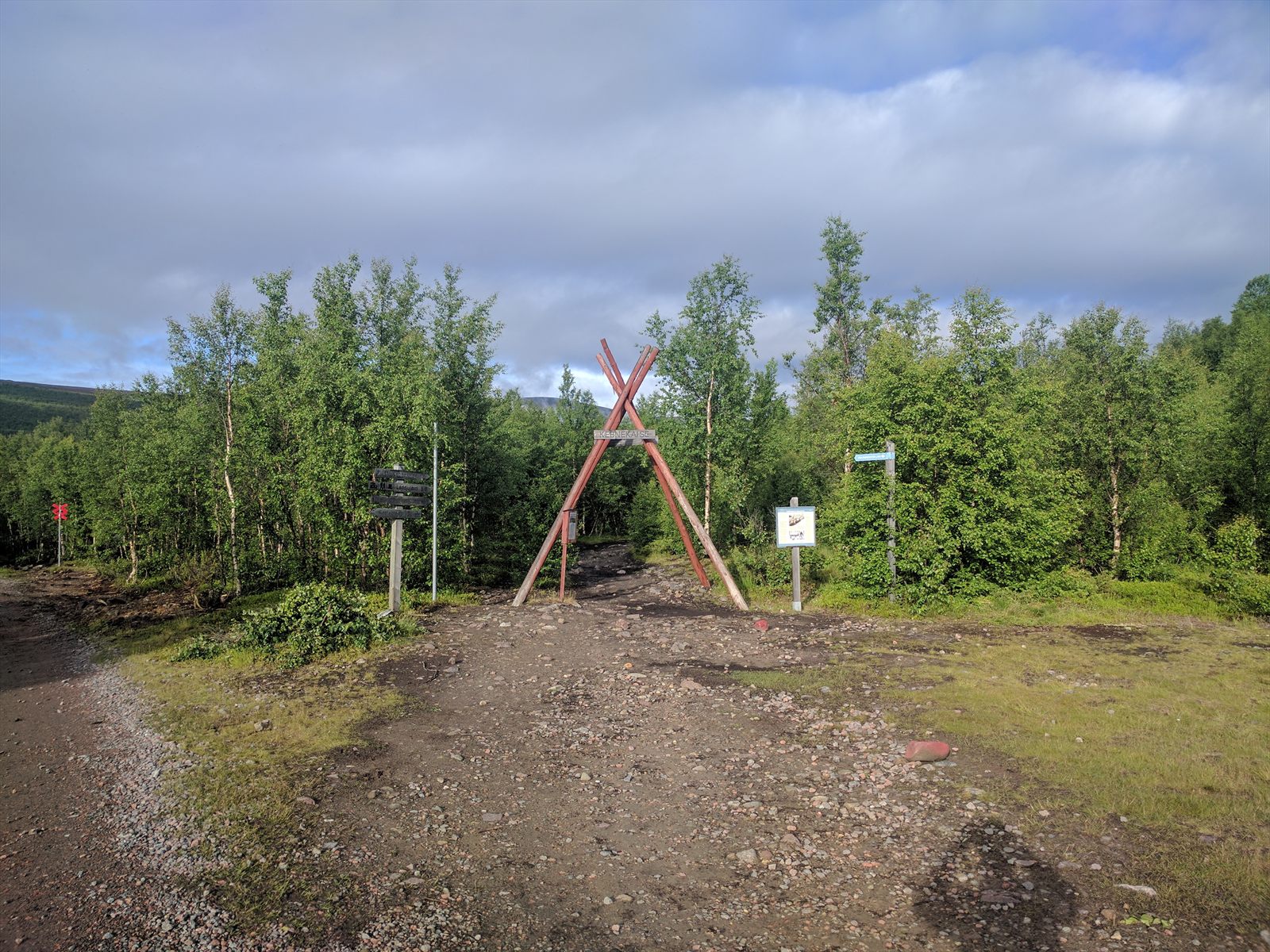
Kebnekaise Mountain Station (1h 44min)
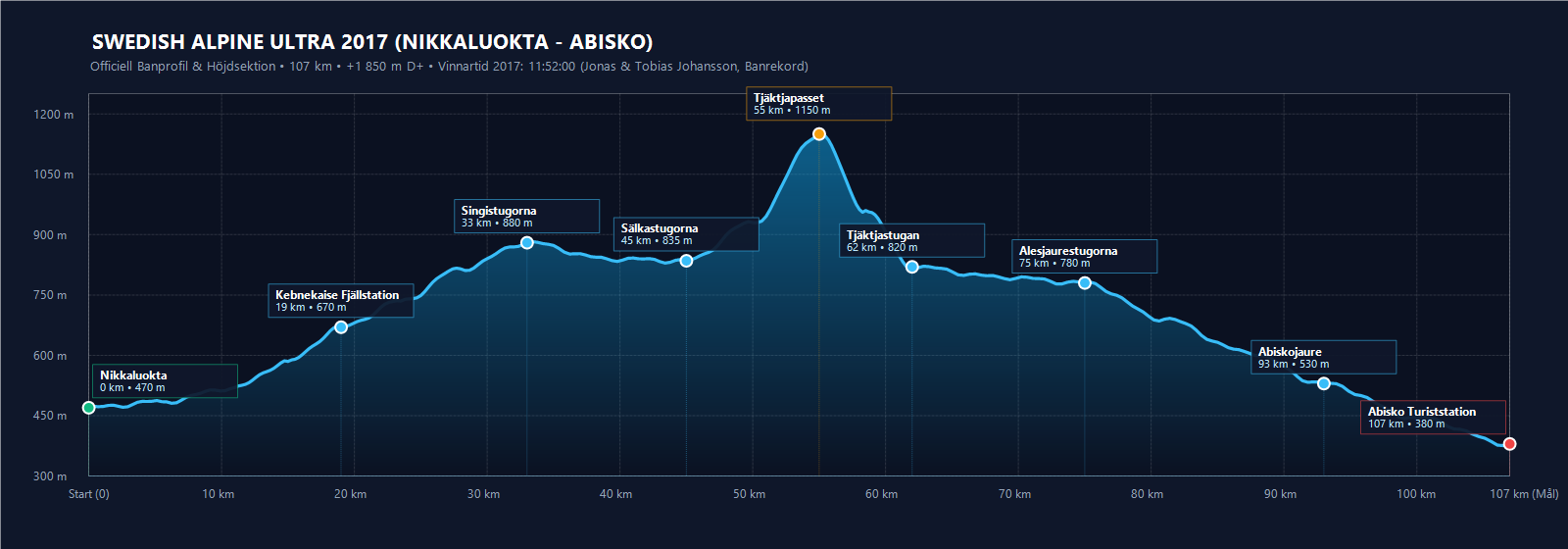
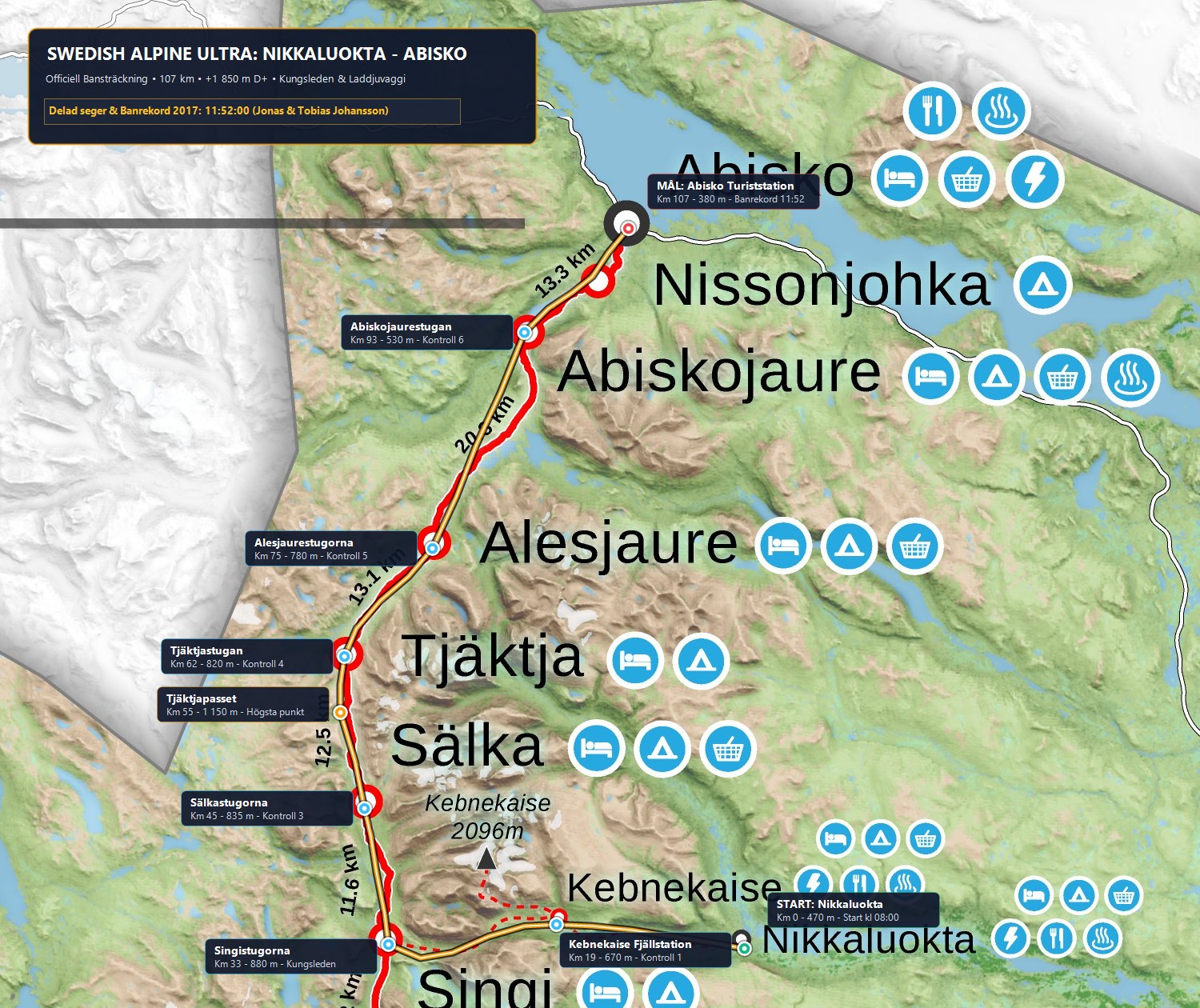
This year, nutrition was priority #1: aggressively pushing calorie intake. Hitting Kebnekaise Mountain Station, we darted straight to the water hose, mixed two fresh bottles of concentrated carbohydrate drink, and charged back onto the trail toward Singi. We entered two minutes ahead of my 2015 split, and departed at the exact same minute.
Climbing the shelf beyond the station, we looked back: not a soul in sight. The trail was wetter than usual, but the fords were manageable. Still, nothing prepares you for the shock of glacial meltwater: wading through 15 meters of near-freezing runoff sends an electric chill up your legs, leaving feet totally numb for the next kilometer. Beyond Kebnekaise, a stiff headwind roared down Laddjuvaggi; cresting ridges required leaning forward to avoid being blown backward. Midway to Singi, I had to stop and ask Tobias to fish gloves from my pack as my fingers had gone completely numb.
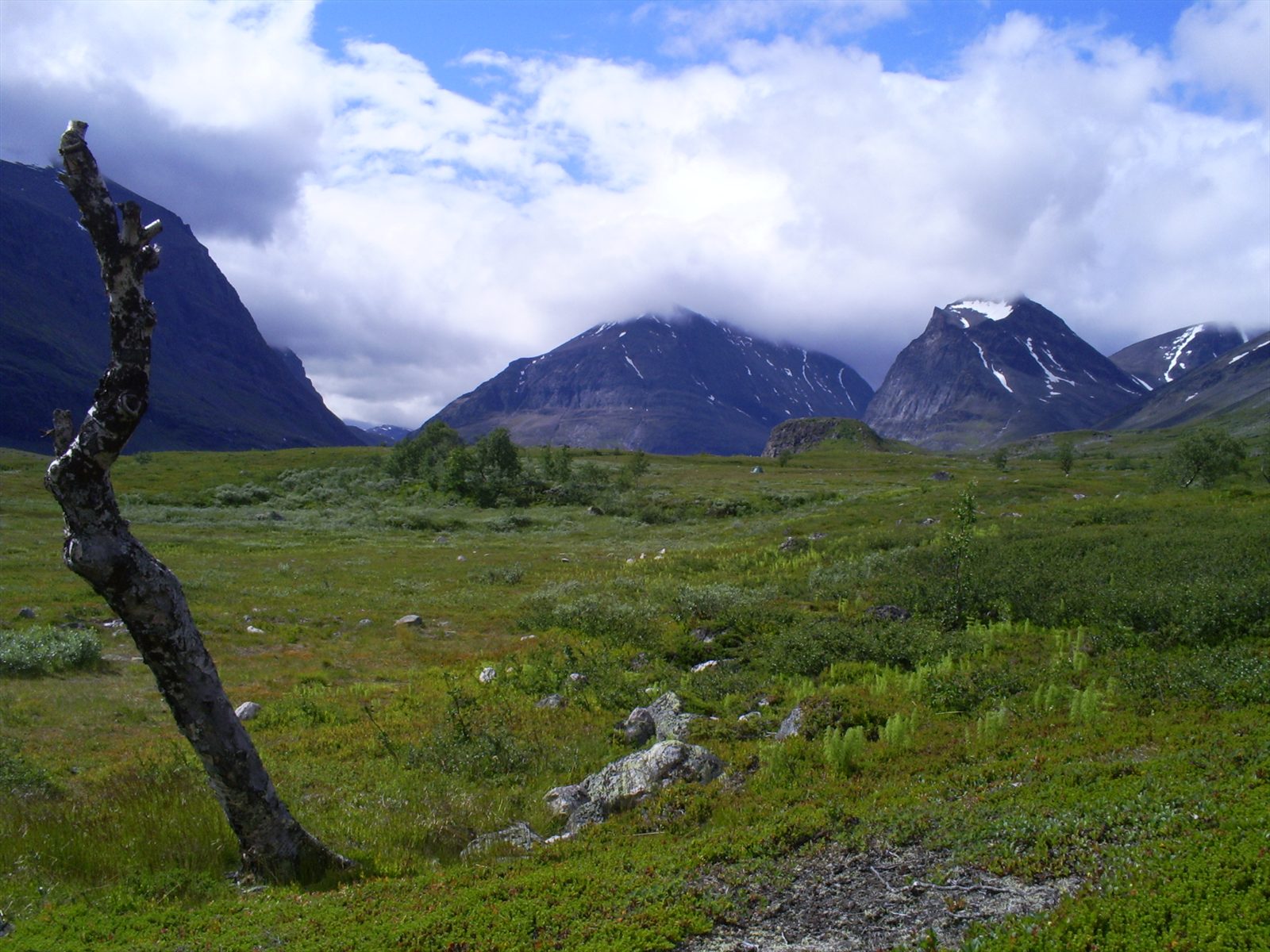
Singi (3h 19min)
It felt like we were clipping along faster than two years prior, but checking the watch at Singi cabin, the split was identical down to the minute: 3:19. Still right on record pace. We waved to the hut warden and pushed straight up the valley toward Sälka. Fueling was dialed at nearly 300 kcal per hour. The headwind died down, warming the valley. Aside from a brief 1 km energy lull, this stage flew by in that meditative ultra flow state where miles dissolve without conscious thought.
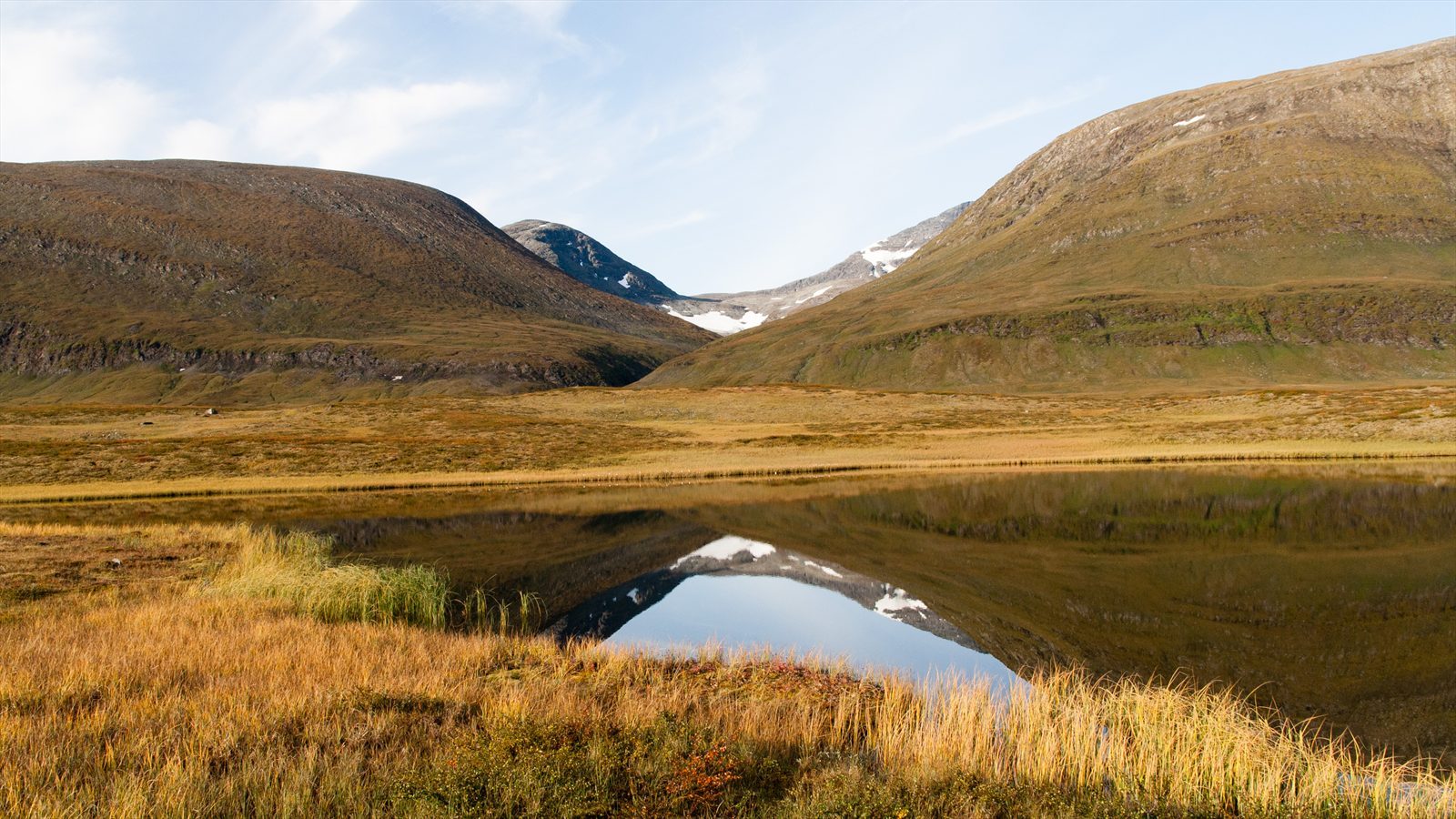
Sälka (4h 43min)
Given how fluidly we had rolled and that I had fought cramps here in 2015, I was convinced we had built a buffer. Rolling into Sälka: 4:43:00—the exact same second as my 2015 record! That was the moment I realized just how exceptional my 2015 run actually had been.
In 2015, continuous snow had begun right here at Sälka. Today, only scattered snow patches dotted the ascent toward Tjäktja. Consistent snowpack didn't appear until a kilometer below the pass. The climb up Tjäktja Pass (1,150 m) went remarkably well; despite wet, heavy slush, only a few pitches saw feet slipping backward. Cresting the roof of the course, conditions were ideal: the snow was firm enough to glissade down the steep north face on our shoes without punching through to the hip, quickly delivering us to dry tundra where we could open up our stride again.
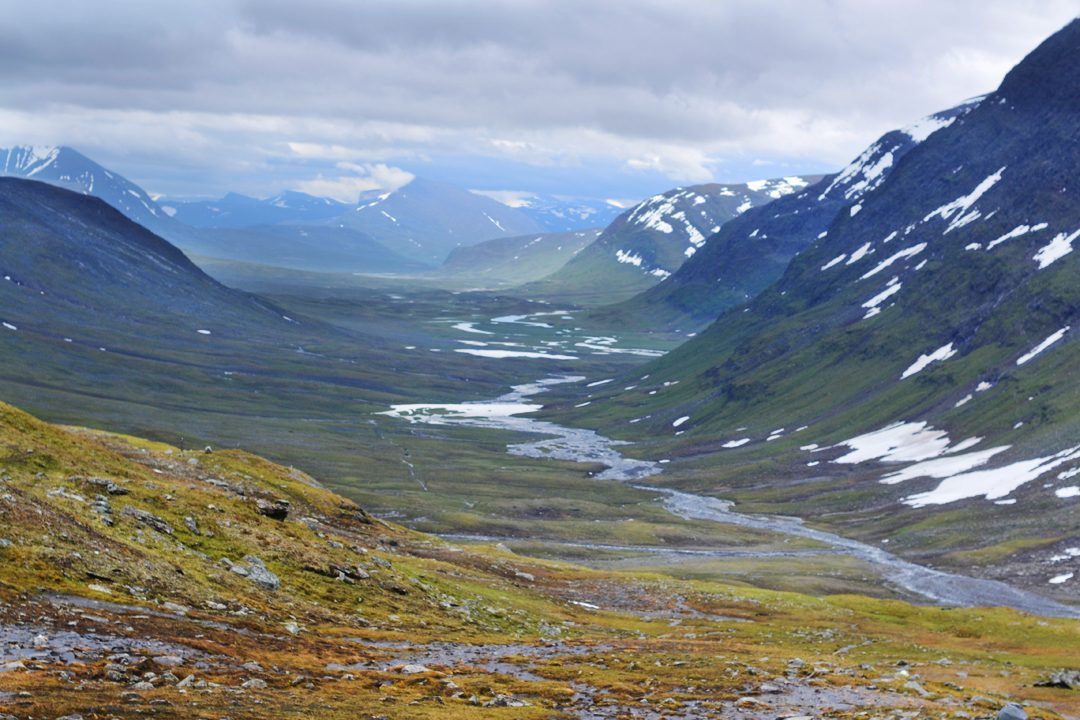
Tjäktja (6h 31min)
Running down to Tjäktja hut felt effortless compared to the waist-deep drifts of 2015, yet our split had only improved by 10 minutes. Down at the major river ford, a hard-packed snow lip blocked the entry. With frozen feet already past caring and zero time to hunt for stepping stones, we slid down the snowbank straight into the current and waded across. From there to Alesjaure was pure steady running, walking only the sustained rollers to down food. In races, I completely lose the capacity to stop and take photos—reaching into a vest pocket feels like a monumental calorie expenditure when every ounce of energy is poured into forward momentum.
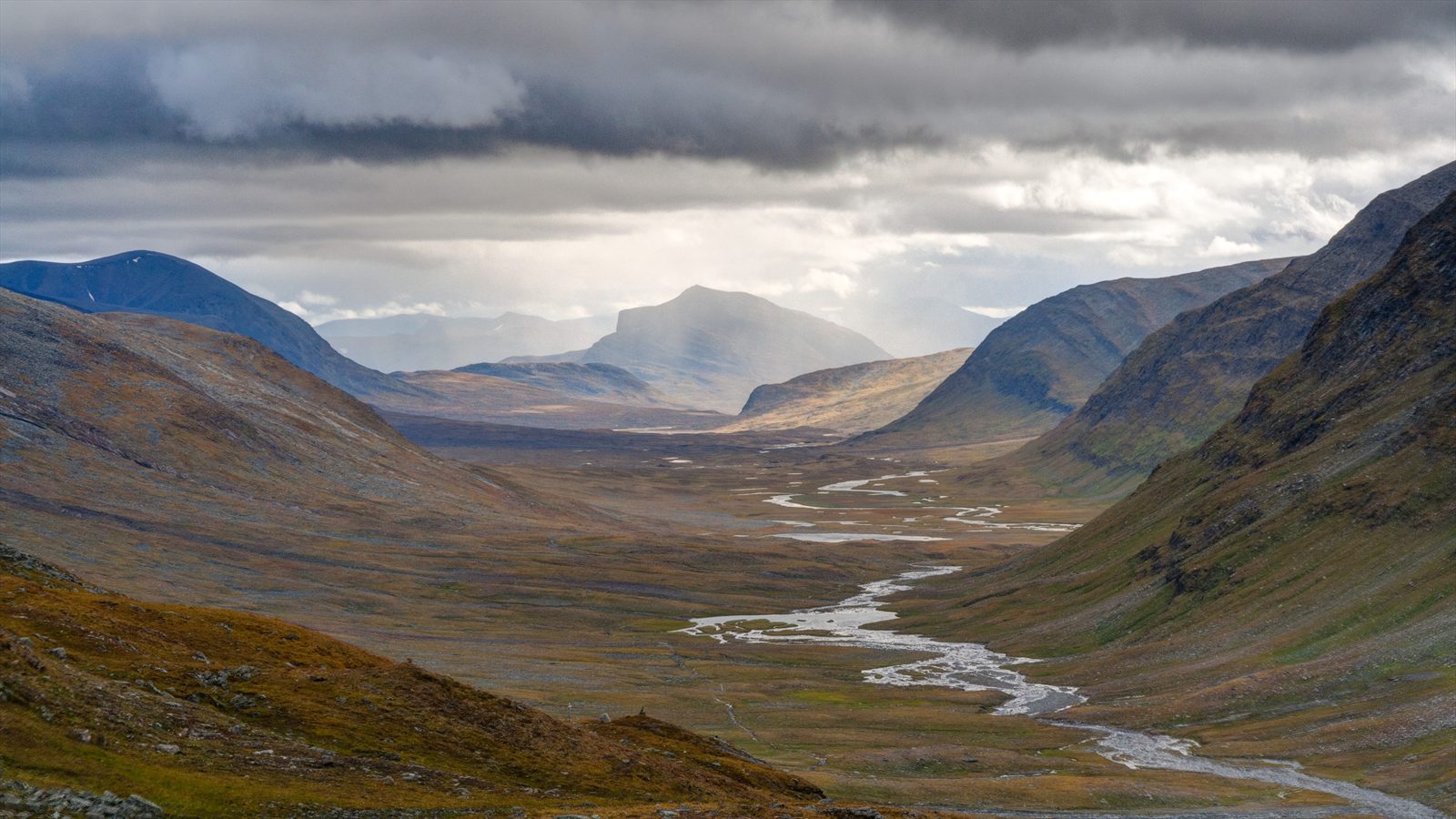
Alesjaure (7h 59min)
Reaching Alesjaure, the hut warden greeted us as we refilled flasks from the fresh tank. Standing still, I suddenly felt the powerful tailwind at our backs. Checking the watch: 7:59—once again, identical to my 2015 benchmark! We laughed, took a deep breath, and launched into the long, psychological grind along the shore of Lake Alesjaure, where the trail seems to stretch into infinity without ever changing scenery.
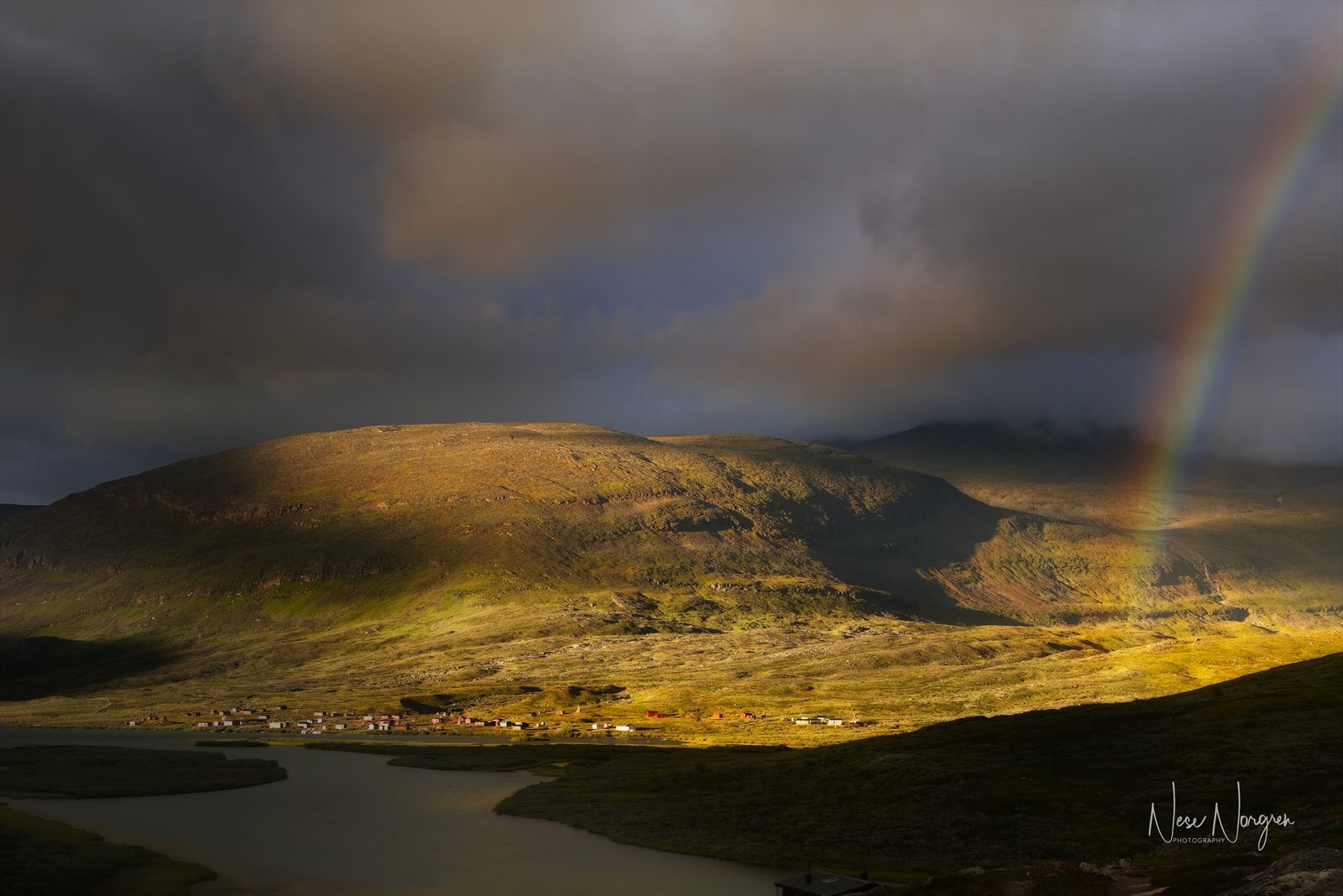
We ran virtually the entire lakeside stage. Midway through, disaster struck: I stepped on a seesaw rock with my left heel; the front flipped up like a lever and kicked my big toe dead-on at full sprint. An agonizing electric shock shot from the toe straight up through my hip. I limped forward as the toe throbbed fiercely, terrified it might be fractured.
A few kilometers later, I made an even clumsier mistake: leaping onto a slick, water-logged wooden boardwalk angled downhill. My feet shot out from beneath me as if someone had yanked a rug. I slammed flat on my back, twisting my leg underneath. After nine hours on feet, I lay frozen in the mud for what felt like minutes, carefully assessing if anything was broken, before gingerly climbing to my feet relieved to find only bruises.
Abiskojaure (10h 23min)
Descending Kieron Hill toward Abiskojaure, fresh energy surged through my legs. I tested a surge across the boardwalks and the legs responded immediately, though my brain quickly pulled back the throttle: ten hours of mountain running leaves fuel tanks on fumes.
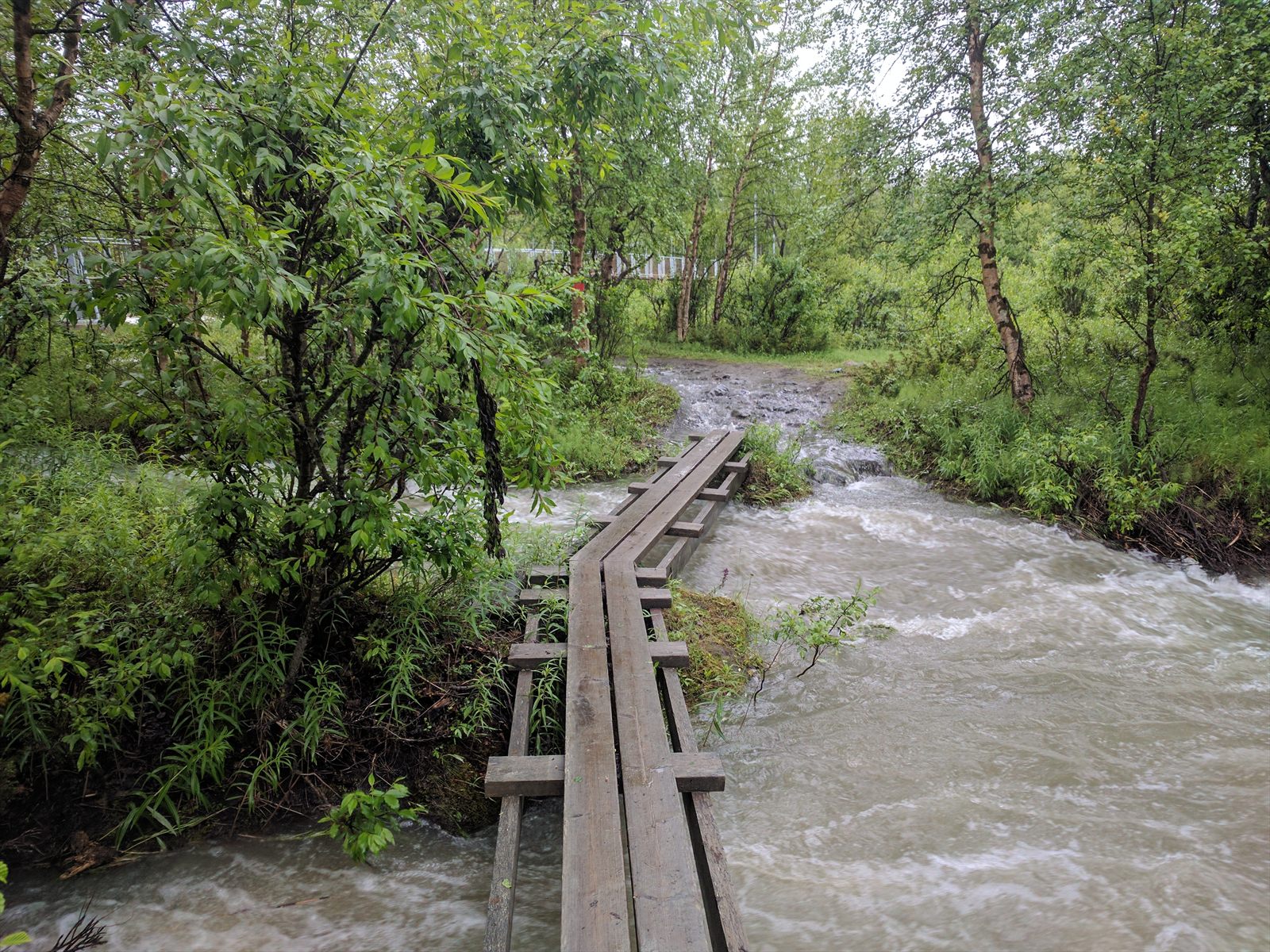
At Abiskojaure, we had lost 3 minutes compared to 2015. With the overall course record safely in the bag and little room for massive time drops, the split obsession dissolved. The final 14 kilometers through the birch groves were clean and fast. As we passed the tent camps, Tobias dialed ahead to let family know we were closing in.
Abisko (11h 52min) – The Finish & New Course Record
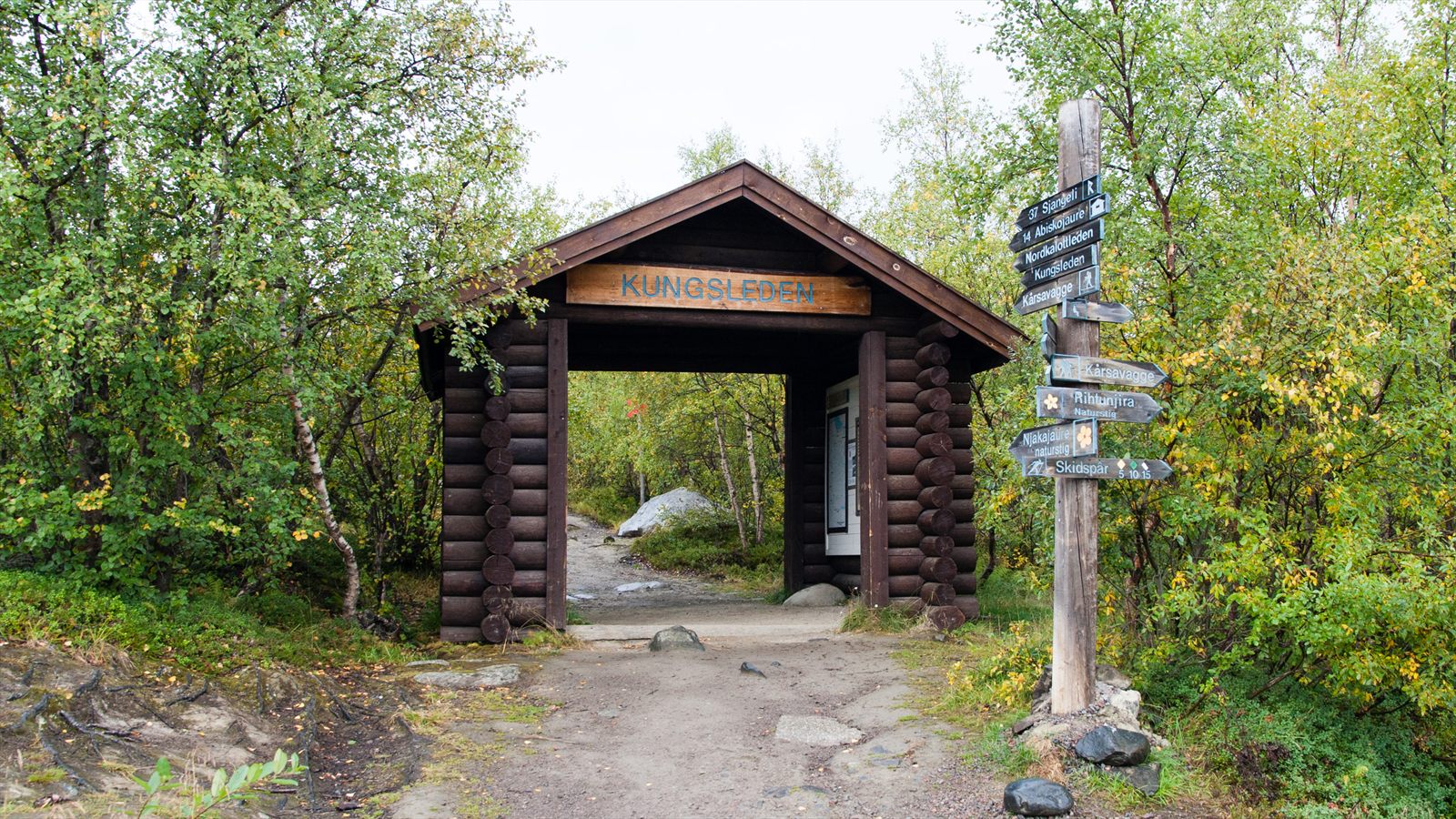
There is nothing quite like crossing beneath the wooden Kungsleden portal, banking left toward Abiskojåkko canyon, and charging up the final grass hill to Abisko Mountain Station. I am fundamentally a solo runner—I thrive in my own private pain cave, preferably hunted by pursuers pushing me to the absolute edge. But running 107 brutal kilometers across the Swedish fells for nearly 12 continuous hours alongside my brother Tobias, claiming the victory together, and shattering the course record in 11:52:00 is an achievement that stands in a league of its own.