Chamonix Build-up and the Pre-Dawn Bus to Courmayeur
After my wife and I spent a wonderful weekend together in Chamonix, it was time for her to fly back home and for me to check into an apartment-hotel with Jonathan and Mårten—two great runners I had befriended during the Swedish Alpine Ultra. My season so far had exceeded every expectation, so naturally my hopes were riding high for the final big mountain objective of 2015. Even though the primary goal was rest and recovery, we managed an easy shakeout run up to the mountain refuge café at La Floria, surrounded by jaw-dropping views. Mostly, though, the days leading up were spent geeking out over nutrition, fat-adaptation, and endurance physiology.
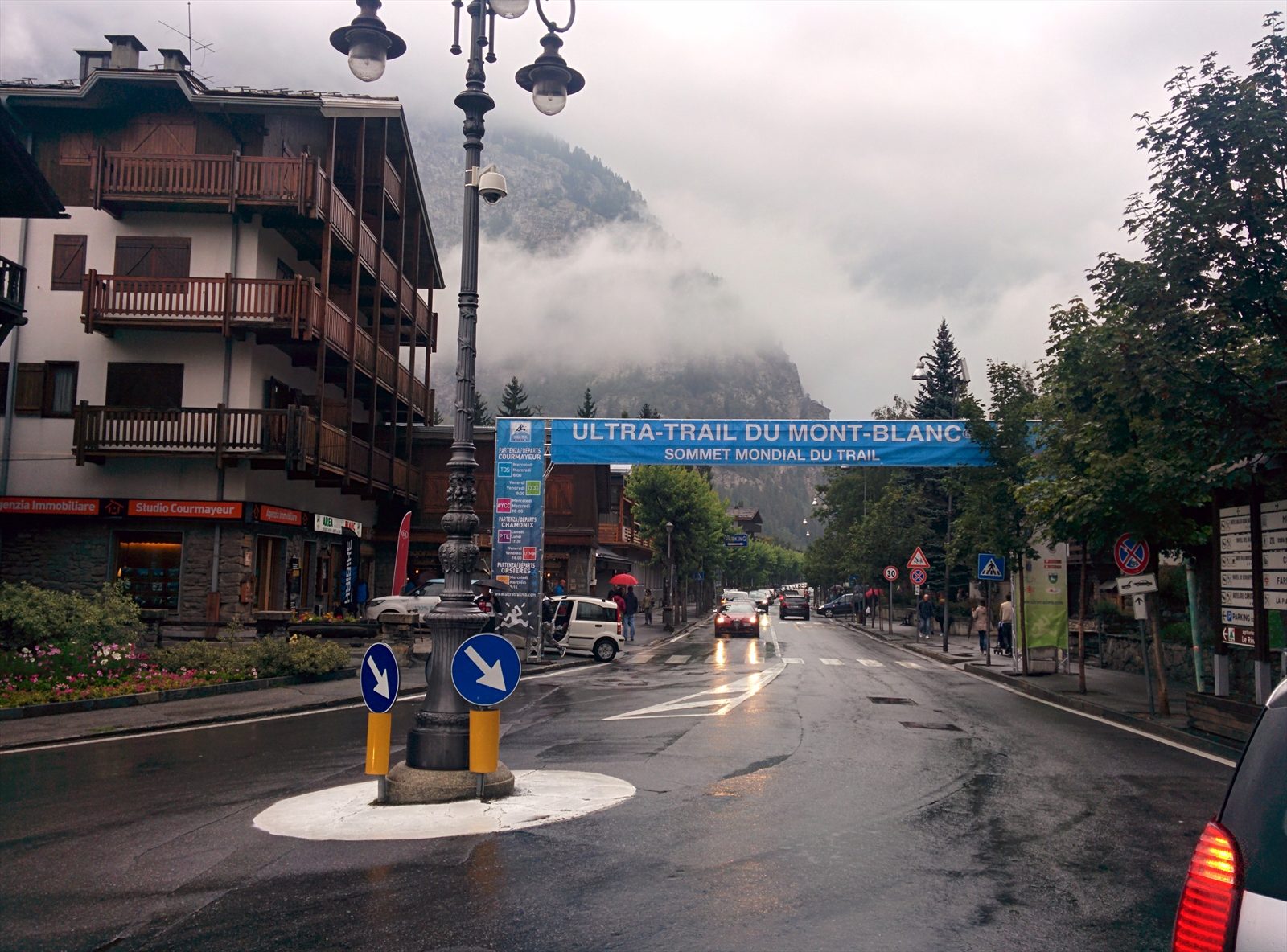
As race morning crept closer, that electric race aggression never quite kicked in. Normally before a massive ultra, I am chomping at the bit—itching to get out on course and redline my engine. This time, I found myself just wishing the whole thing was already over and done with. The day before the race, my body felt sluggish. I joked with Jonathan and Mårten that it was just the classic "phantom ultra taper flu"—nerves playing tricks on the immune system.
Turns out it wasn't phantom at all. I set the alarm for 03:30 to catch the 04:15 shuttle through the Mont Blanc Tunnel to Courmayeur. At 01:00, I woke up soaked in sweat with a pounding headache and completely clogged sinuses. A raging fever and head cold had kicked the door in. I dragged myself out of bed, downed two glasses of water, took a paracetamol, and texted my wife: "There is zero chance I can race in a few hours."
Once the painkiller kicked in, I managed an hour of restless sleep before the alarm buzzed. The headache had dialed back slightly. Since I had traveled all this way and had everything packed, I figured I might as well ride over to Courmayeur just to soak up the atmosphere of the start—run a few easy kilometers with the pack, and then call it a day and take the DNF. I slipped into my everyday training shoes (leaving my dialed race shoes in the bag, since I only planned a morning jog), boarded the bus, and walked into the starting corral with streaming eyes and a running nose.
Courmayeur Dawn and the Grind up Arête du Mont-Favre
The atmosphere at every single UTMB start is pure magic, and Courmayeur was no exception. Dawn was just beginning to paint the jagged ridges of the Italian Alps in purple and gold, and the announcer was in total frenzy, whipping up the energy of 1,600 runners shivering in the alpine morning chill. I slotted in near the front just to feel the full shockwave of the music and cheers. When the gun fired at 06:00, I rolled out at an easy, relaxed clip with the lead pack.
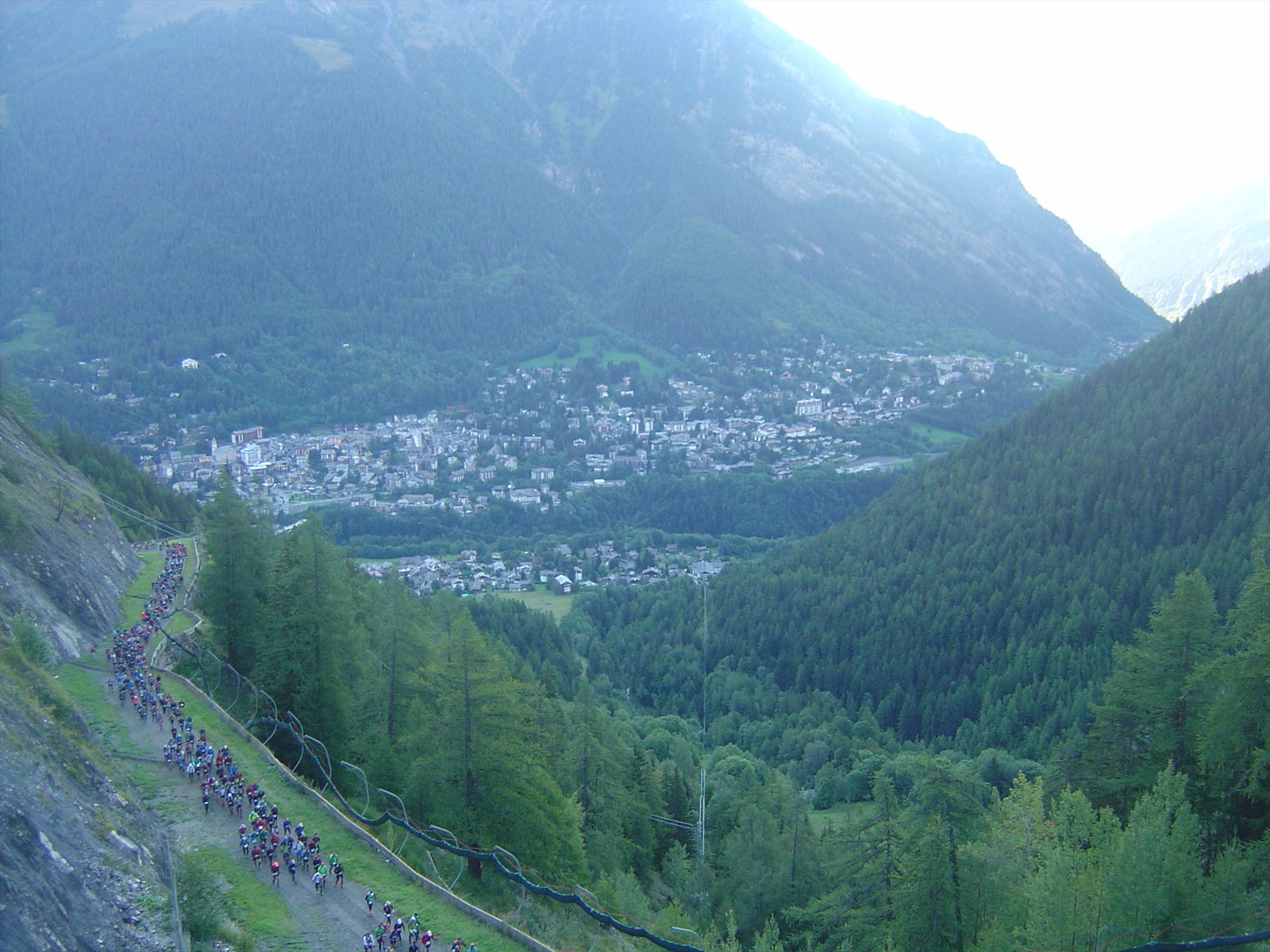
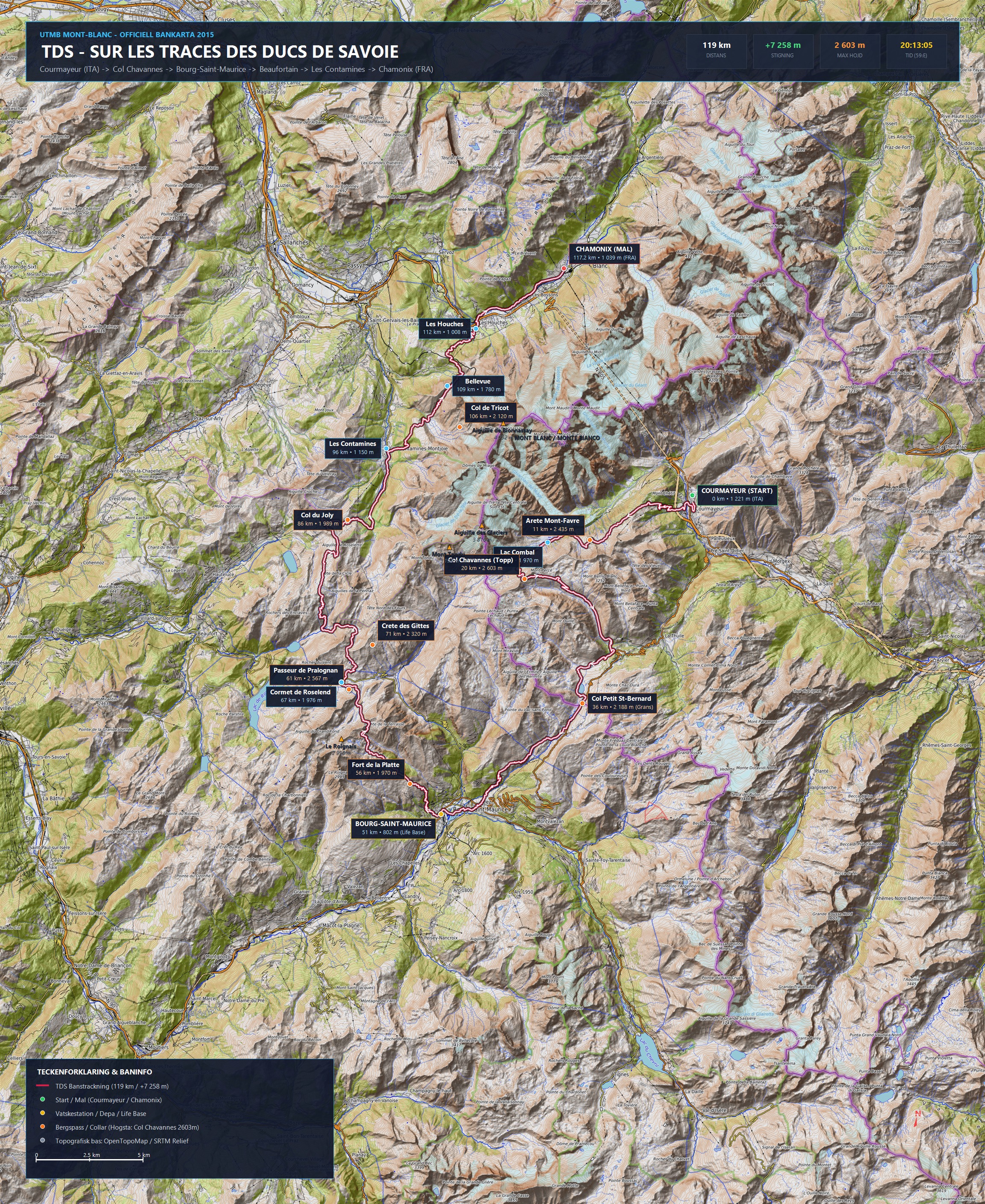
The route wound through Courmayeur for about 2 km before banking sharply upward towards Arête du Mont-Favre: our first serious alpine climb. The moment the grade kicked up, my body sounded the alarm. The engine didn't have its usual torque, and my heart rate was hovering noticeably higher than normal for that pace. Today wasn't about the mind dictating terms; the body had total control. I immediately throttled back, tucked my ego away, and settled into a gentle, sustainable rhythm.
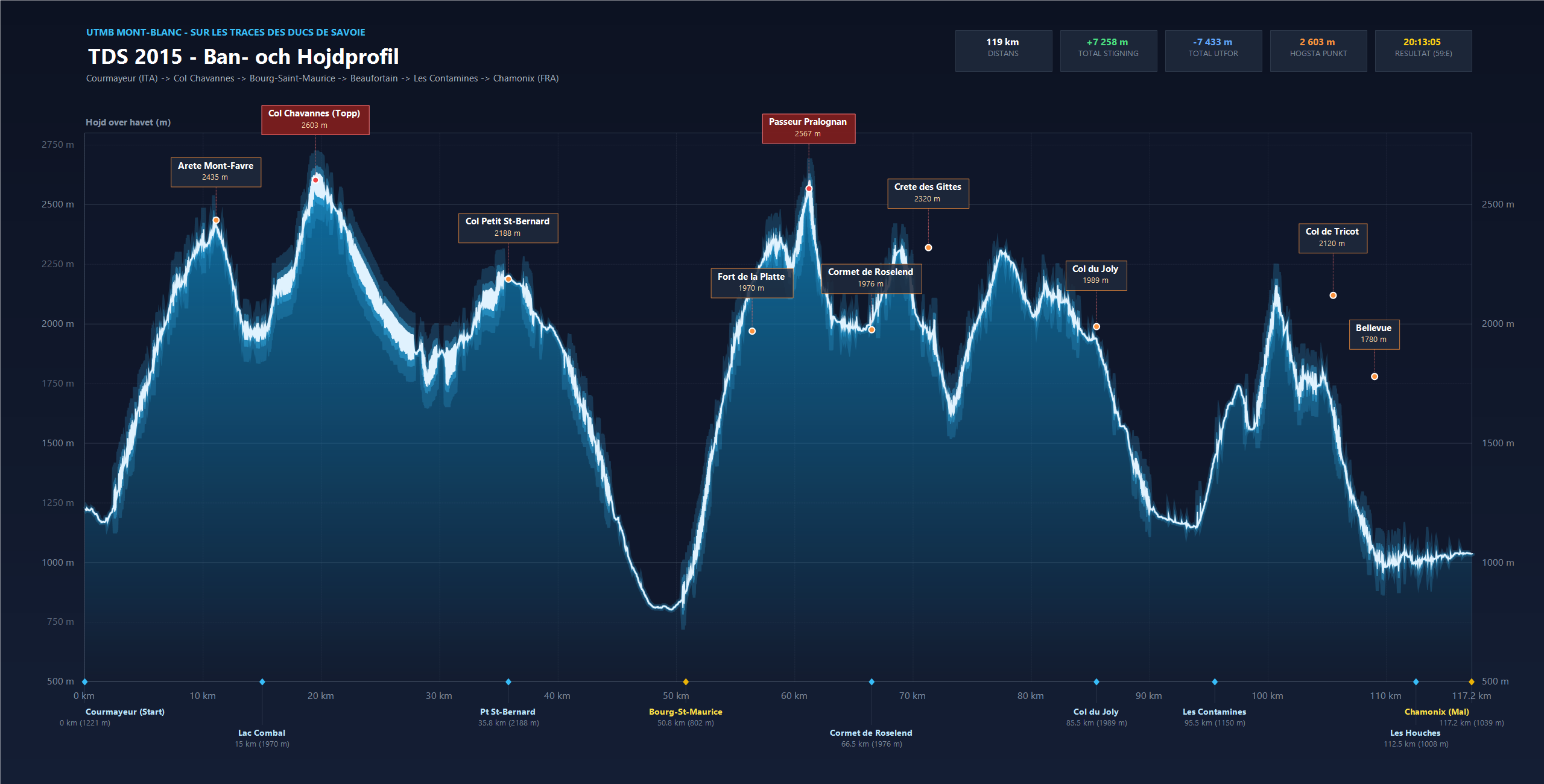
Crossing Arête du Mont-Favre (2,435 m), the trail plummeted a few hundred vertical meters down to Lac Combal before loading up for the high point of the entire race: Col Chavannes. The descent was steep and technical—a trademark of TDS—which suits my running style well. I breezed past a dozen runners on the downhill. Even the flat 1 km stretch along the glacial lake bed felt effortless, and I picked up a few more spots.
Col Chavannes (2,603 m) and the Screaming Descent to Bourg-Saint-Maurice
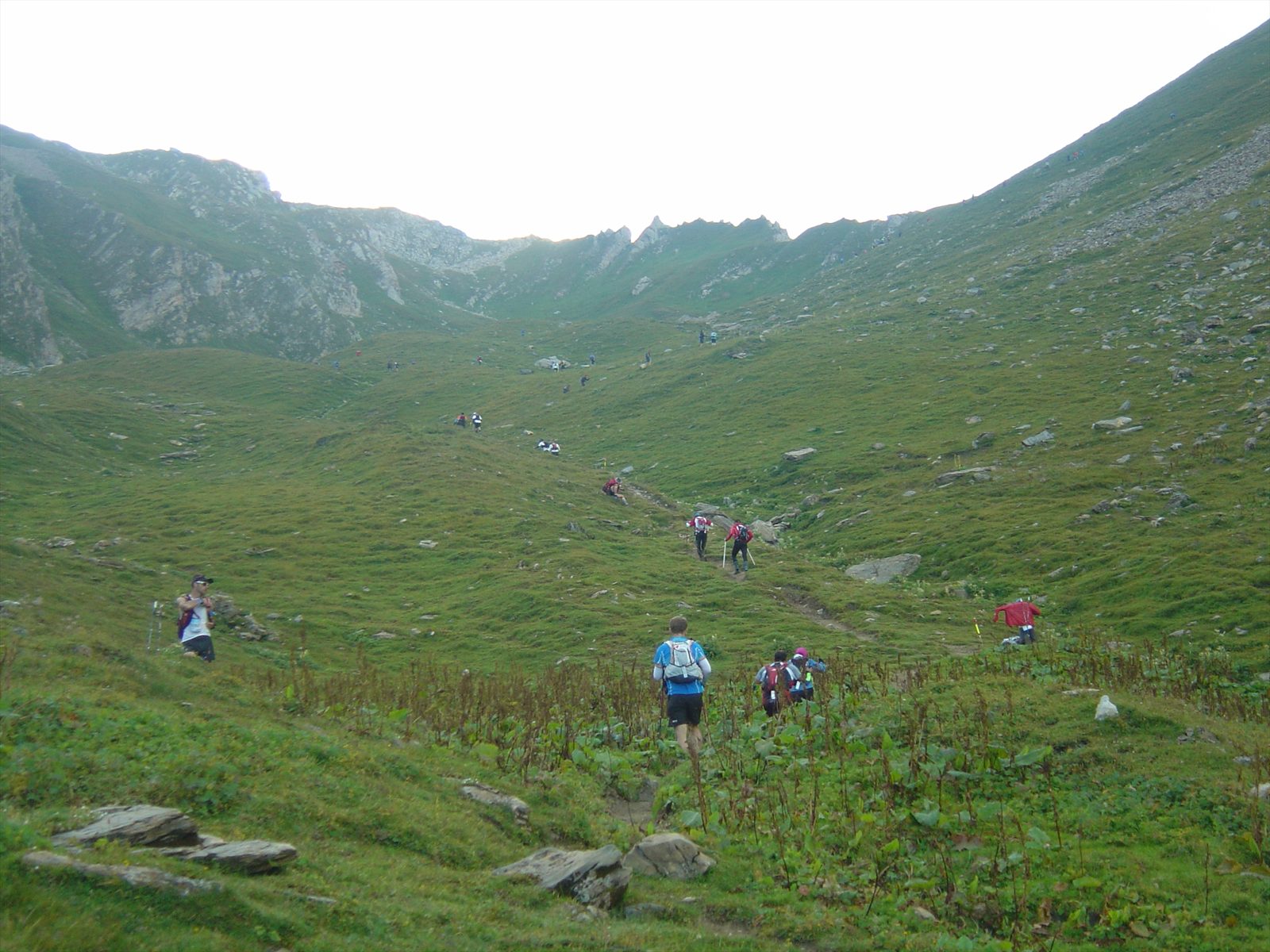
As soon as the trail banked steeply toward Col Chavannes, the head cold slammed into me again. I had to throttle down once more, watching helplessly as at least fifty runners marched past me. The climb was punishingly steep and loose; for the first time in the race, we were on all fours scrambling over granite shelves.
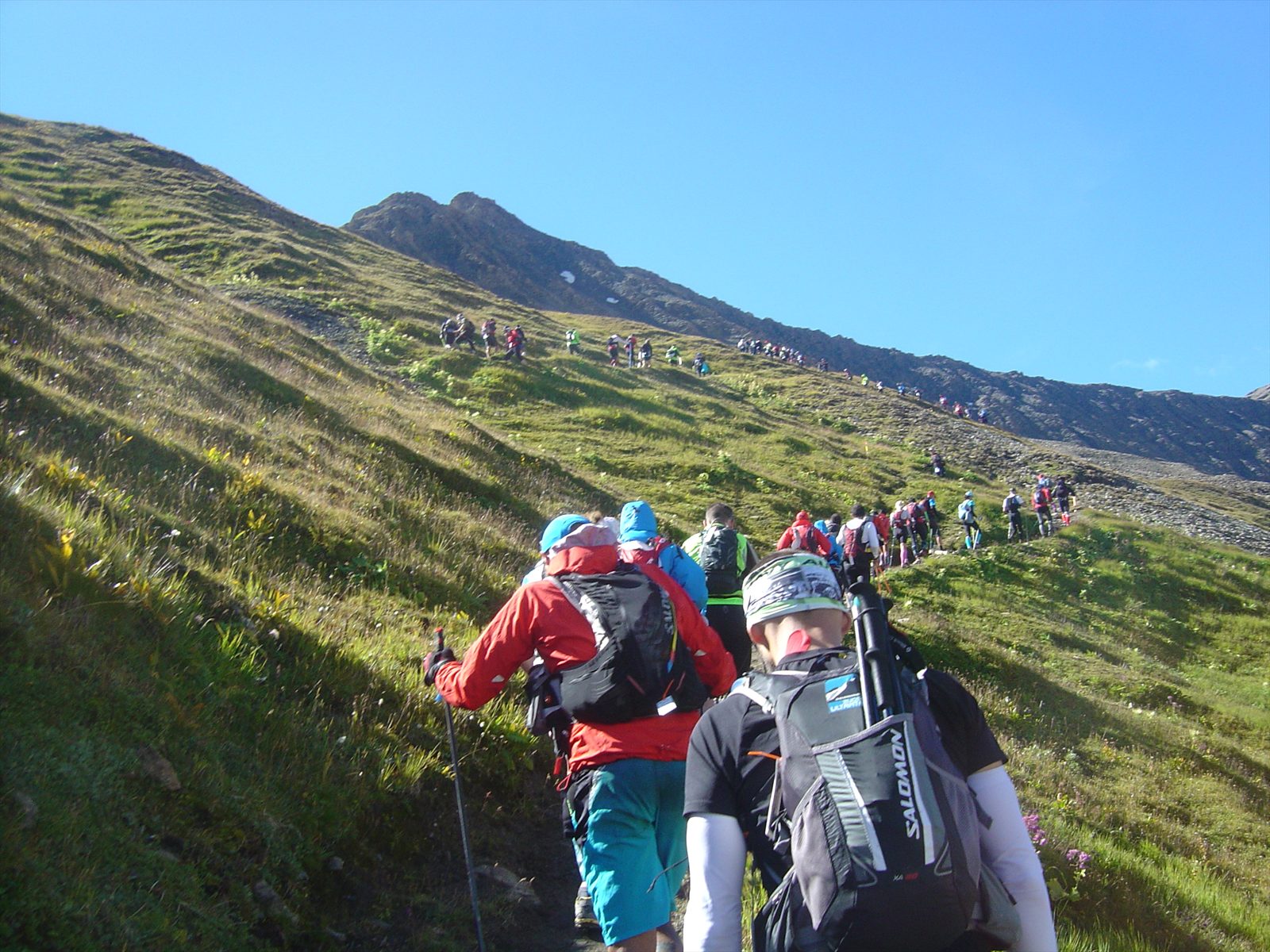
By the crest of Col Chavannes (2,603 m), I had already been on feet for 3 hours while covering barely 22 kilometers—yet we had already chewed through almost 2,000 meters of climb and 600 meters of drop. Beyond the pass, the terrain eased into an open gravel track carving down through Vallon de Chavannes, opening up long stretches of fast, leg-stretching downhill running.
Aside from a modest bump over Col du Petit Saint-Bernard (2,188 m), it was an uninterrupted 2,400-meter drop all the way down to Bourg-Saint-Maurice, the lowest valley floor on the course at 813 m. At every aid station, I indulged in everything the French tables had to offer: local cheese, cured meats, fresh baguette, honey, and coke. Whether it was the wild culinary smorgasbord or the fever running through my veins, my stomach completely revolted on the descent into Bourg-Saint-Maurice. Sharp cramps hit me like clockwork, forcing emergency pit stops at the top of virtually every major downhill for the remainder of the race.
Bourg-Saint-Maurice and the Brutal Wall to Passeur de Pralognan
Hitting Bourg-Saint-Maurice (813 m) just past noon, the sun was blazing with full fury. The suffocating heat in the valley floor was easily between 30 and 35°C (86–95°F), conditions I absolutely detest. My legs felt like lead and I couldn't match the pace of runners I had previously passed. I minimized aid station time and scrambled back onto the trail as fast as possible, desperate to climb into cooler alpine air.
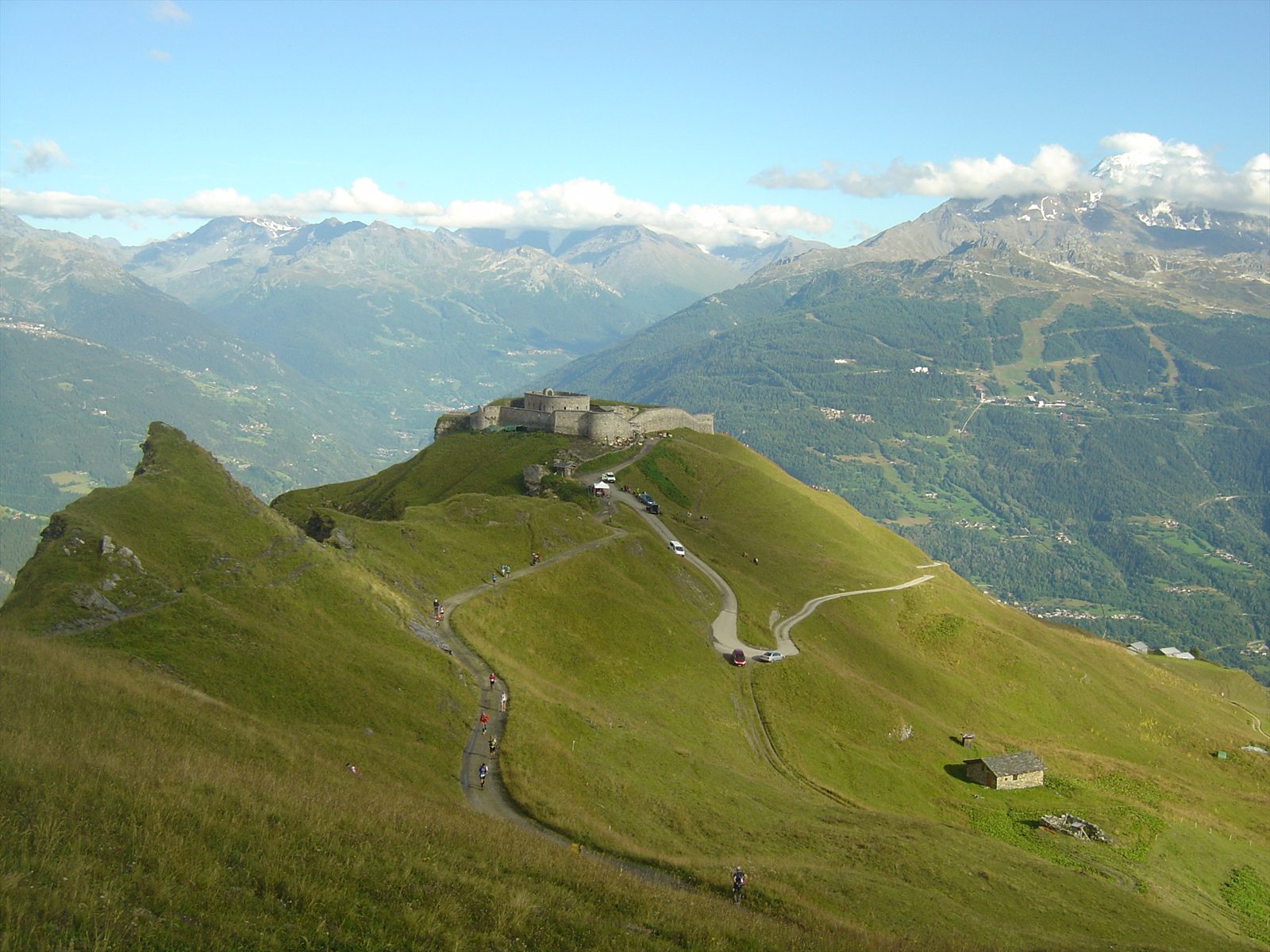
The cool air took its sweet time coming. Ahead lay the undisputed monster of the course: 1,900 vertical meters of climbing in under 10 kilometers. In sections, the slope was almost comically steep, and combined with the stifling heat, forward progress slowed to a crawl. The views, however, were sensational. A chain of 19th-century military forts—most notably Fort de la Platte—stood guard over the slopes, serving as mental checkpoints to reassure me that I was actually moving upward. Toward the final tiers of the climb, I fell in step with Martin from the Czech Republic, who was grinding at the exact same rhythm.
Passeur de Pralognan (2,567 m): Scrambling with Cables and Ropes
That monster ascent chewed up nearly three full hours. Cresting Passeur de Pralognan (2,567 m) and looking down the back side was a surge of pure relief. But the drop on the other side was anything but easy; it felt far more like a mountaineering route than a hiking trail.
Heavy ropes and steel cables were anchored directly into the granite, safeguarding sections where the mountain dropped away vertically. Without them, there would have been no handholds whatsoever. After a few hundred meters of hairy down-climbing, the gradient leveled off into runnable singletrack.
Despite ten hours of mountain warfare, my legs felt remarkably fresh. I was rolling easily across the rocky terrain. For the first time, it hit me just how much this part of Beaufortain resembled Kungsleden and the Swedish Alpine Ultra—endless boulder fields, barren tundra, and massive open sky. The last 2 kilometers leading into Cormet de Roselend flattened out, allowing for a good stride. Unfortunately, a wicked stitch seized my ribs, forcing me to walk the final stretch into the checkpoint, where I bumped into Martin again, who was also walking with weary quads.
Cormet de Roselend, Crête des Gittes, and the Wild Chemin du Curé
Martin and I rolled into Cormet de Roselend (1,976 m, km 67), where our drop bags were waiting with fresh fuel, spare shoes, and a backup watch charger. I stuffed gels and bars into my vest and hooked the charger to my GPS, but left the fresh shoes behind—my trusty training shoes were still doing an outstanding job without a single hotspot.
Over warm broth, Martin brought up the possibility of breaking 20 hours. It was the first time all day I had even considered a target time—up until then, I had been running purely on feel, simply curious how far a feverish body would carry me. We ran the numbers, realized sub-20 was genuinely within reach, and agreed to work together and share the pace work.
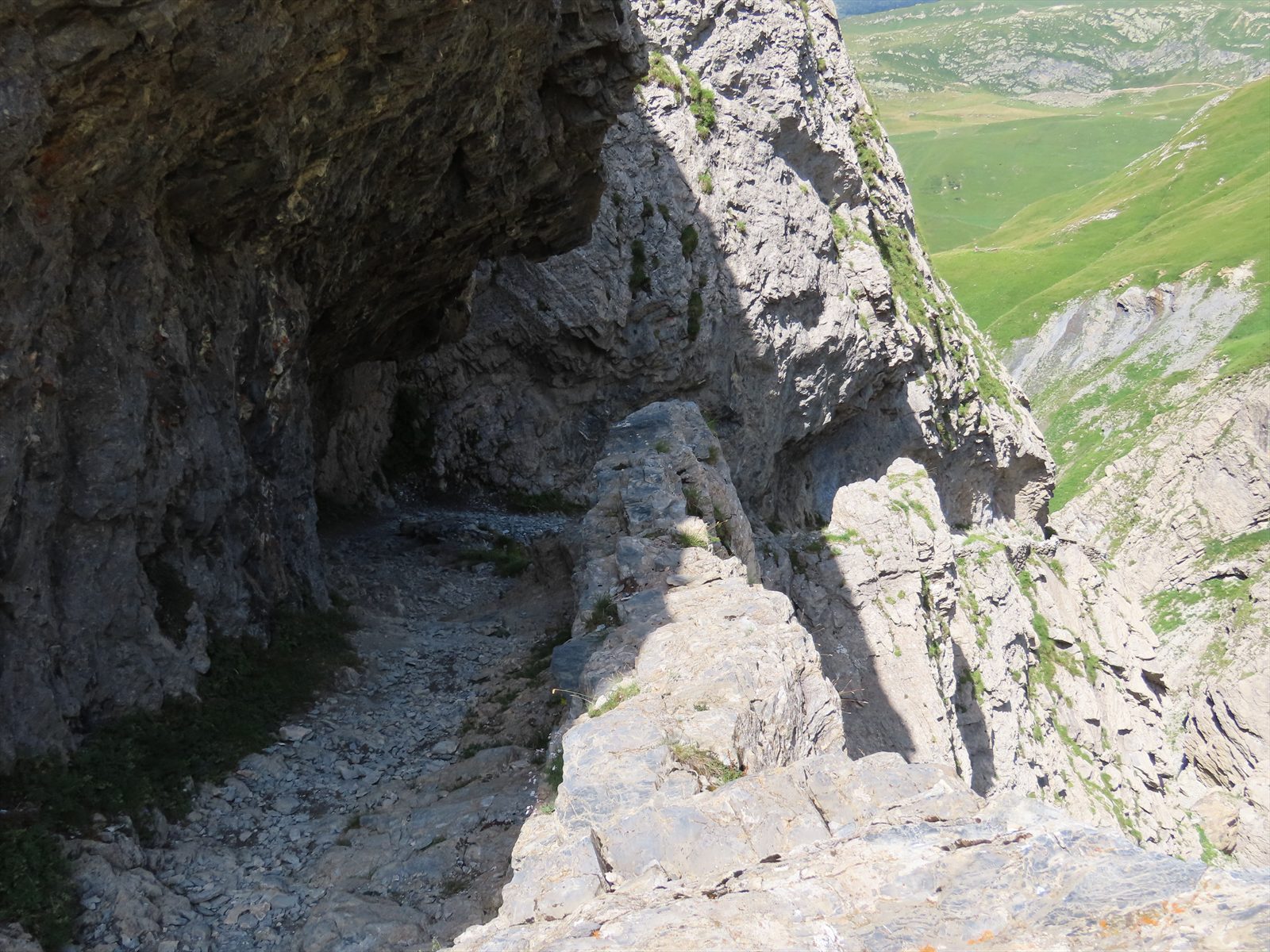
Martin pushed hard out of the gate and I struggled to match his early pace. I urged him to preserve energy, knowing how much rugged terrain still separated us from Chamonix. Sure enough, approaching La Gitte, the gap closed and he began to drift back. Right around there, we crossed one of the most stunning features of the entire event: Chemin du Curé—a narrow ledge carved into the cliff face hovering over a crashing mountain river.
At La Gitte, Martin told me to press ahead solo. A familiar dance played out: I would forge ahead on the climbs, but as soon as the trail banked down, stomach cramps would strike, forcing another bathroom stop, and Martin would catch right back up. We leapfrogged like this all the way to Col du Joly as the sun dipped behind the western peaks.
Col du Joly: Headlamp On and the Plunge Toward Les Contamines
At Col du Joly (1,989 m, km 86), I saw Martin for the last time. Ahead lay a long, relatively smooth descent dropping 750 vertical meters into the valley. I sorted my stomach, pulled my headlamp from the bottom of my pack, and clicked the beam on as dusk faded into full darkness.
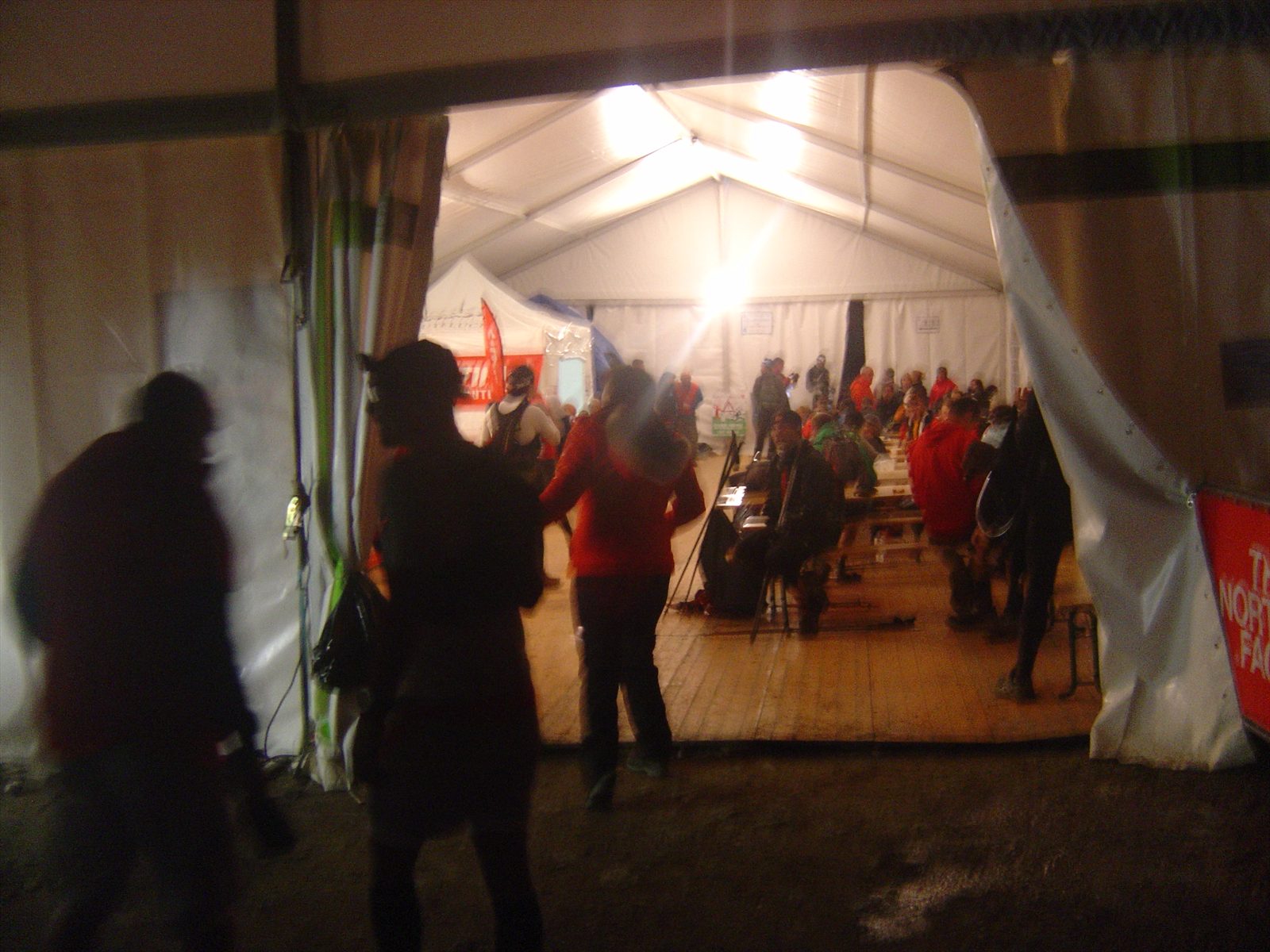
Out of the aid station, I flew down the wide gravel roads until the trail ducked into technical forest tracks, where my side stitch flared up again. Soon, I latched onto two French runners who would become my comrades for much of the night. We rotated pulls: they attacked the tricky technical downhills with effortless confidence, while I closed the gaps and pulled on the flat sections and steady ascents.
Hitting the valley floor brought us to the final major support station at Les Contamines-Montjoie (1,153 m, km 96). I downed multiple bowls of steaming hot broth and topped off my flasks for the final brutal mountain barrier: the fearsome Col de Tricot.
Col de Tricot, the Glacial Suspension Bridge, and the Mud of Les Houches
Starting up the lower flanks of Col de Tricot, deep muscular fatigue hit my legs for the very first time. No surprise really—with 100 km and nearly 6,000 meters of elevation gain logged over 16 hours of running in the dark. For a fleeting minute, the thought flashed through my mind that the head cold was finally pulling the plug. I gritted my teeth, locked onto the heels of my French companions, and refused to give up an inch.
Thirty minutes in, a wave of energy returned. The climb up Col de Tricot (2,120 m) was among the steepest on the whole course. In the dead of night, looking up the face was unforgettable: a serpentine chain of hundreds of glowing headlamps twisting endlessly up the mountain wall. Along the path, we stepped around runners who had simply collapsed into the grass right off the trail to sleep—one careless roll and they would have tumbled hundreds of meters down the alpine meadow.
At the pass, the French runners stopped to catch their breath. I pushed straight into the steep descent to build a buffer. Within minutes, they came thundering past on the rocky switchbacks, their headlamp beams disappearing into the trees. At the bottom waited the thrilling Passerelle de Bionnassay—a suspension bridge swaying heavily over a roaring glacial torrent in pitch blackness.
Beyond the bridge, the route alternated between fast woodland singletrack and scrambles equipped with safety cables. It was probably a blessing that it was midnight; you couldn't see the dizzying drops beneath your shoes. The final plunge toward Les Houches was an absolute mud bath—slick, greasy switchbacks where your feet slid sideways with every step, followed by a steep asphalt descent that pounded the quads. Only 10 kilometers left to Chamonix. Time to dig deep.
The Finish in Chamonix: 20 Hours, 13 Minutes, and 59th Place
At the final checkpoint in Les Houches (1,008 m, km 112), I downed a cup of cola and immediately surged back onto the trail. The profile showed flat ground following the Arve river into Chamonix—and flat, fast running was my superpower. I immediately picked off two runners, pulled my phone from my pocket, and called my wife back home. She had been awake tracking me online all night. Hearing her voice and telling her I was going to pull this off was an unbelievable emotional high.
I tried calling Jonathan and Mårten with no luck—it was pushing 02:00 in the morning, after all. But five minutes later, my phone buzzed: they were up, dressed, and waiting right at the finish line in central Chamonix.
With 5 km to go, I swept past the two French runners I had teamed up with through the mountains; they were walking the flats and cheered warmly as I went by. Ahead, another headlamp was bobbing. Over the next 3 kilometers, I reeled him in step by step. Just as we turned into the illuminated streets of Chamonix, I kicked into a sustained finishing sprint, blew past him at high speed, and he had no reply.
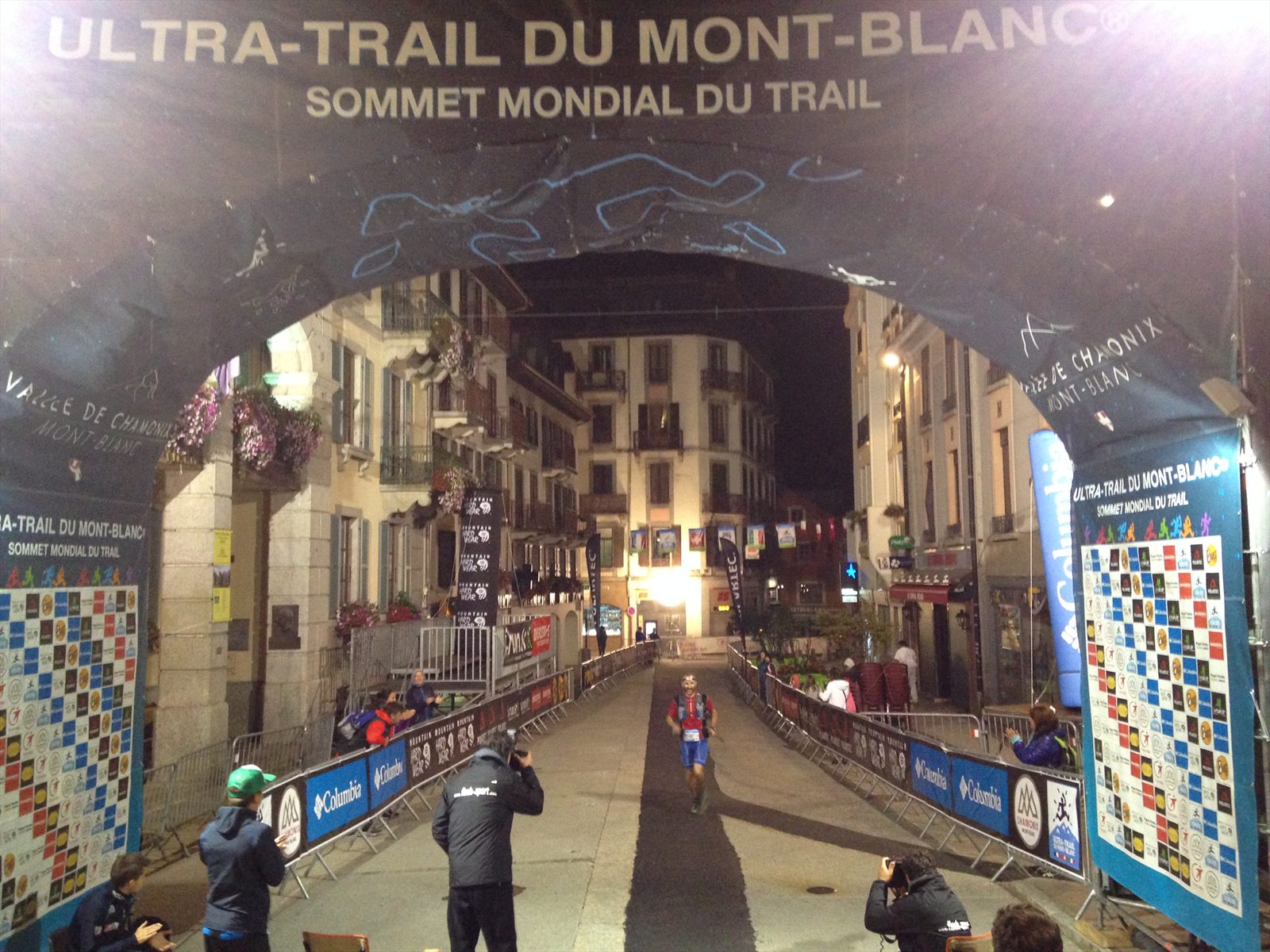
Those final 500 meters through Chamonix were pure euphoria. Even at two in the morning, passionate spectators lined the barricades, cheering and banging cowbells for the night finishers. And right there at the timing line stood Jonathan and Mårten, screaming at the top of their lungs! Jonathan captured these photos right as I crossed.
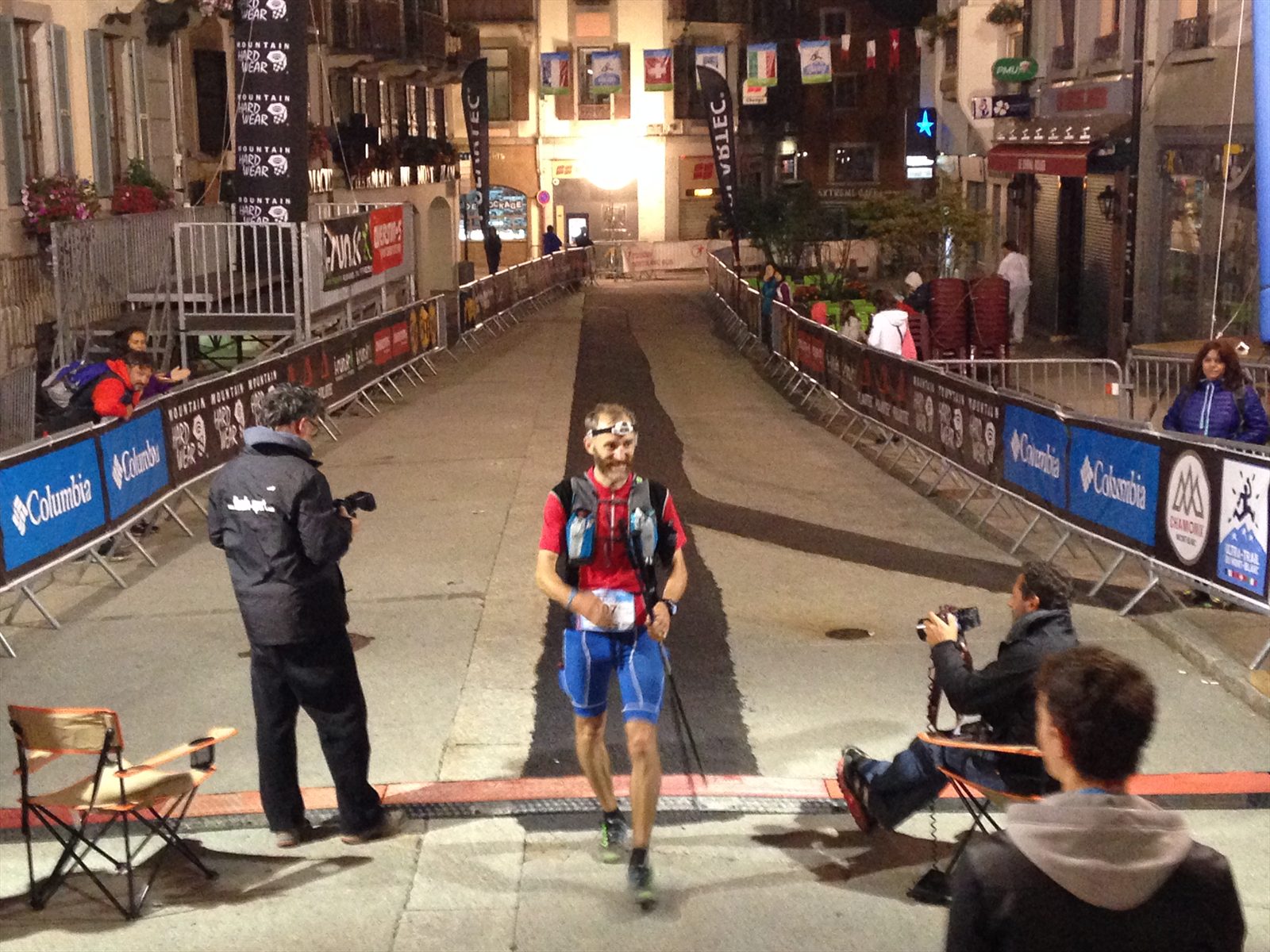
Crossing that timing mat in 20 hours, 13 minutes, and 5 seconds felt nothing short of miraculous. When Jonathan broke the news that I had placed 59th overall, I could hardly believe it. Considering I had woken up at 1 AM shivering with a raging fever and headache, raced the entire 119 km in beat-up road training shoes, and fought stomach cramps all afternoon, this result was beyond anything I could have dreamed of.
Split Times & Waypoint Breakdown (119 km // +7,250 m D+)
| Checkpoint / Waypoint | Distance | Elevation | Terrain & Highlights |
|---|---|---|---|
| Courmayeur | 0 km | 1,200 m | 06:00 start. Electric atmosphere, measured opening pace with fever. |
| Arête du Mont-Favre | 11 km | 2,435 m | First big climb (+1,200 m). Elevated HR; conscious pacing control. |
| Col Chavannes | 22 km | 2,603 m | Course high point. Technical scrambling using hands on rock faces. |
| Col du Petit St-Bernard | 36 km | 2,188 m | Crossing Italian-French border. Feasting on local French aid station fare. |
| Bourg-Saint-Maurice | 51 km | 813 m | Lowest point on course. 30–35°C heat in valley basin; stomach cramps strike. |
| Passeur de Pralognan | 62 km | 2,567 m | The Monster Climb (+1,900 m via Fort de la Platte). Ropes and cables on vert descents. |
| Cormet de Roselend | 67 km | 1,976 m | Drop bag base. Fresh fuel, watch recharge, setting sights on sub-20 hours. |
| Chemin du Curé / La Gitte | 74 km | 1,665 m | Spectacular rock-cut ledge hovering over raging alpine canyon. |
| Col du Joly | 86 km | 1,989 m | Nightfall. Headlamps on; charging down fast gravel to Les Contamines. |
| Les Contamines-Montjoie | 96 km | 1,153 m | Hot broth revival. Physical low in legs beaten back by drafting French runners. |
| Col de Tricot | 106 km | 2,120 m | Night serpent of headlamps up the ski slope. Swaying Bionnassay suspension bridge. |
| Les Houches | 112 km | 1,008 m | Final aid. Quick phone call home, strong flat tempo along the Arve river. |
| Chamonix (Finish) | 119 km | 1,035 m | Finish 20:13:05 • 59th Overall in TDS 2015! |
Reflections and Looking Forward
Looking back, TDS was easily the most breathtaking and majestic race of my life up to that point. Whether that came down to running just below my redline and having the mental space to look up and admire the alpine panoramas, or whether TDS simply is that much wilder and more rugged than other events, is hard to say.
I was beyond satisfied with 59th place. It felt like there was plenty of speed left on the table if I had toed the line healthy and without gut spasms. But above all, surviving TDS gave me the ultimate belief: I was ready for the pinnacle event of the sport—the full 171-kilometer Ultra-Trail du Mont-Blanc (UTMB) around the entire massif!