Upplandsleden – Sigtuna to Barkarby
As spring 2020 unfolded, official races were wiped off the calendar one after another, leaving only pure training. Not that "just" training is a bad thing—quite the contrary. Stripping away the competitive pressure and simply running for the pure joy of movement is deeply liberating. But I still craved a definitive benchmark, a goal that demanded full focus and commitment. That's what led me down the rabbit hole of the Fastest Known Time (FKT) movement: targeting a notable, distinct route and attempting to cover it faster than anyone in recorded history.
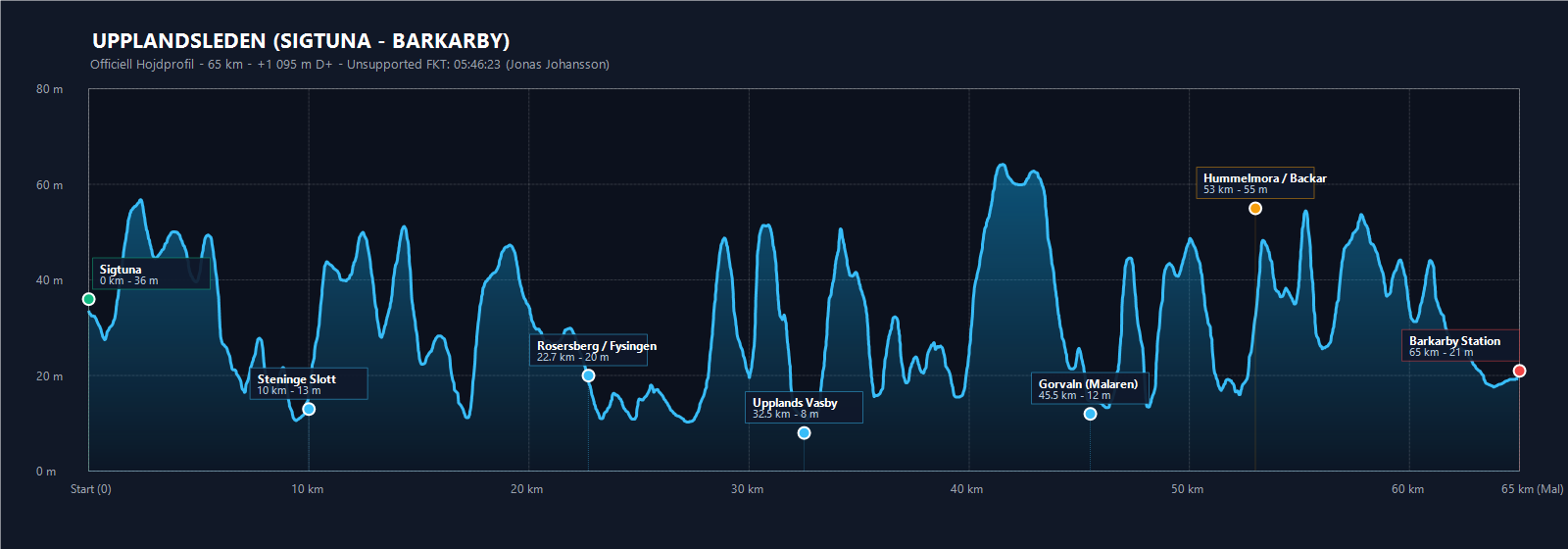
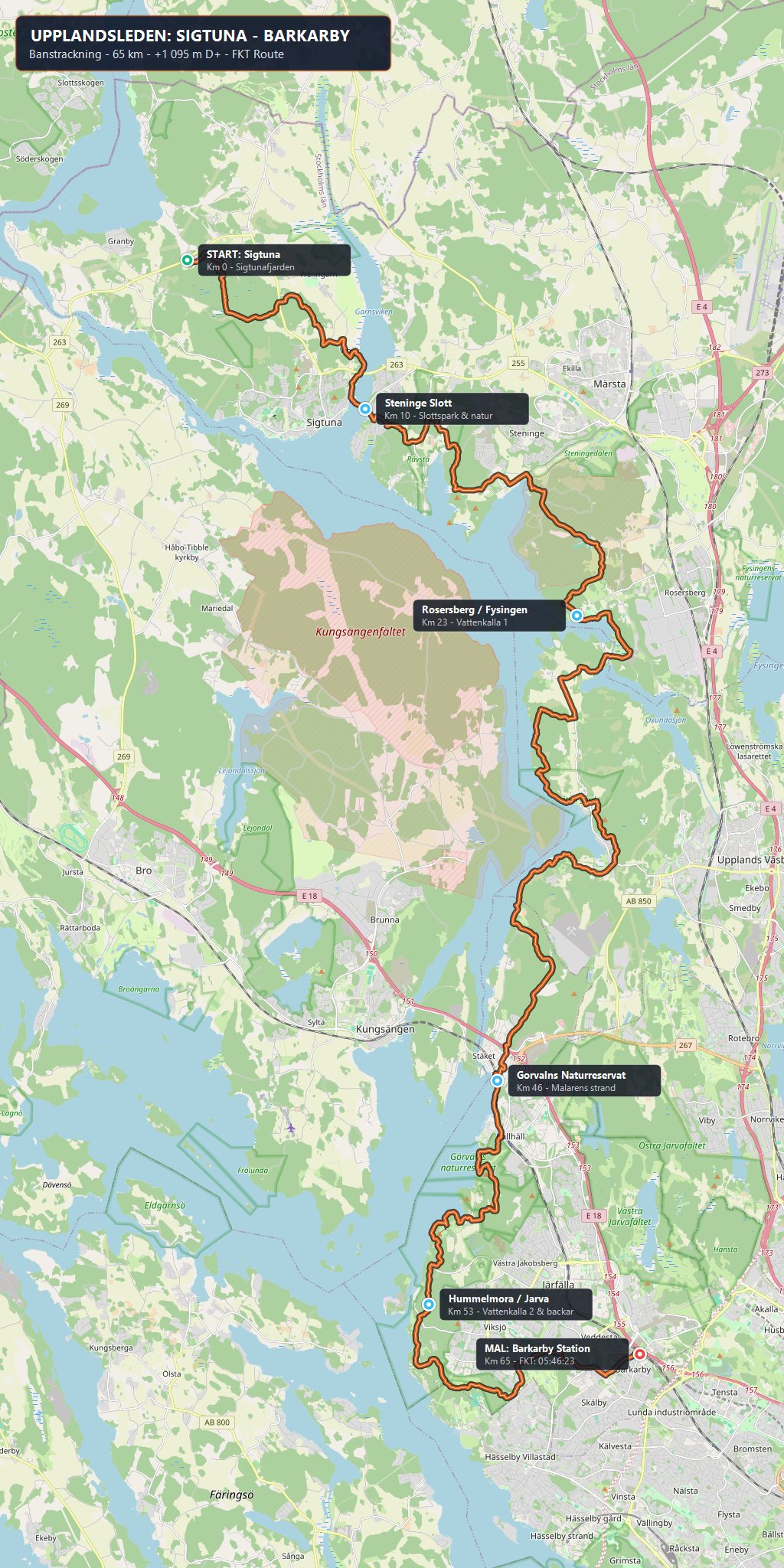
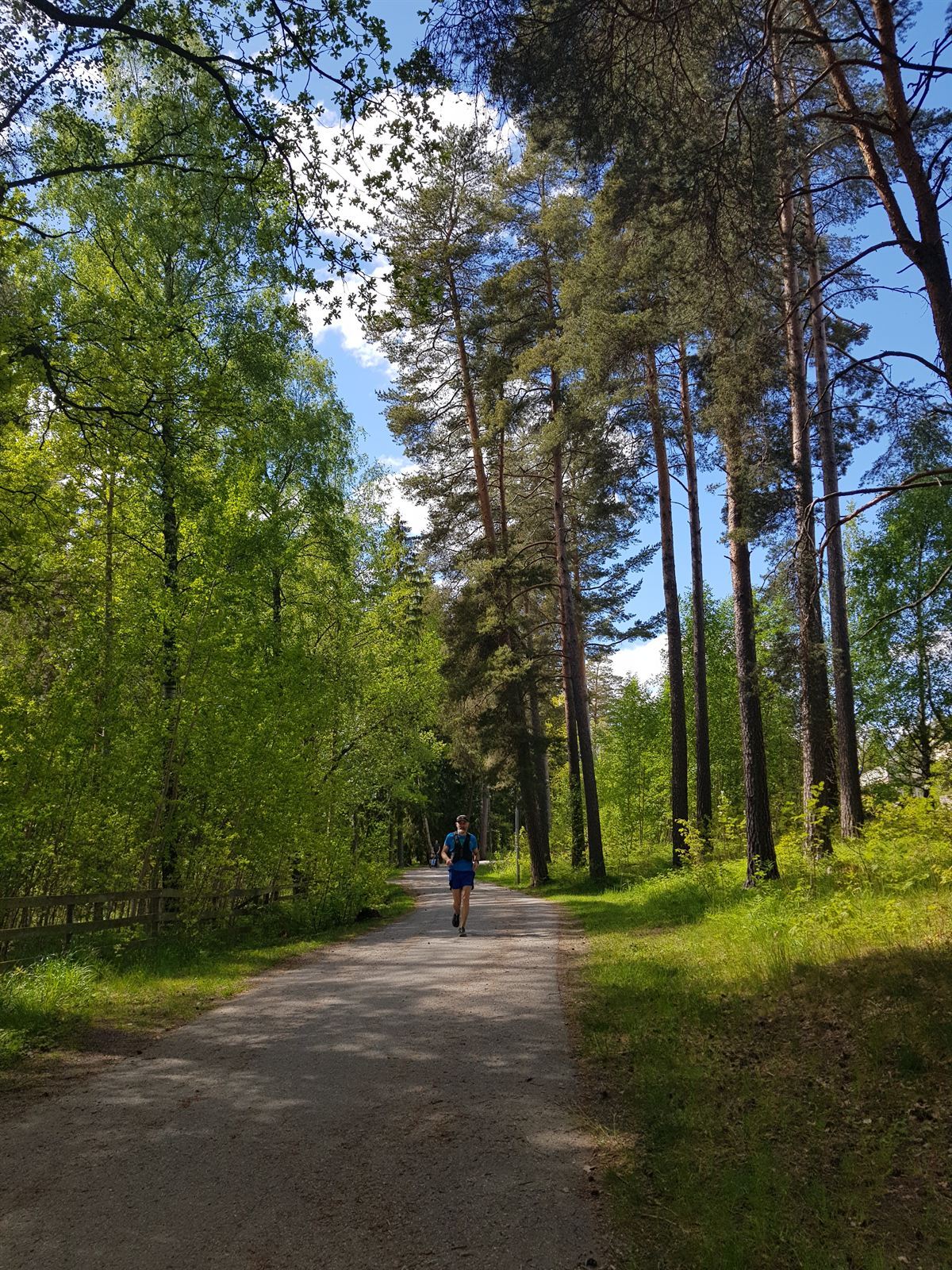
My favorite trail near Stockholm is the scenic branch of Upplandsleden stretching from historic Sigtuna down to Barkarby. Although technically separate from the main trail in Uppland county, it winds through magnificent lakeside forests along Lake Mälaren. I had run various segments hundreds of times, but never stitched the entire line together in a continuous push. It was the natural choice for my first official FKT attempt.
FKTs are recognized under three styles: Supported, Self-Supported, and Unsupported. I chose Unsupported: zero outside assistance of any kind. No crew, no pre-stashed caches, and no ducking into stores or gas stations for water. Everything had to be carried from the start or scavenged naturally. Scouting the route, I located a water pump inside a cattle pasture around km 22, and another spigot two-thirds into the route. I logged the route on FastestKnownTime.com, received swift route verification, and marked May 30, 2020 on the calendar.
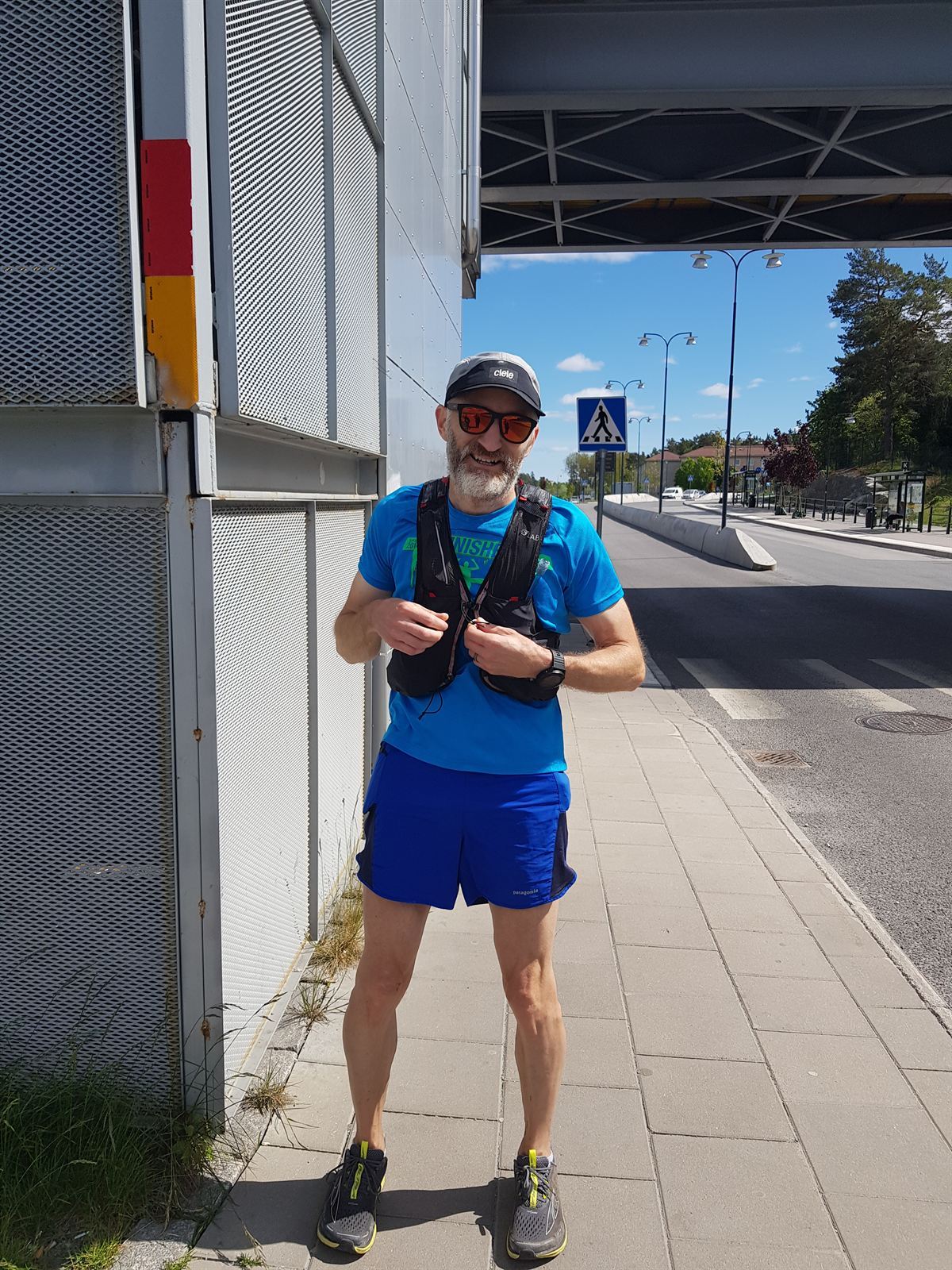
True to form before any major ultra objective, I slept lightly the night before and woke before the alarm. I packed calorie gels, my GoPro, and a backup GPS watch in case of tech failure. My wife dropped me off on the quiet shoreline of Sigtuna, and I launched.
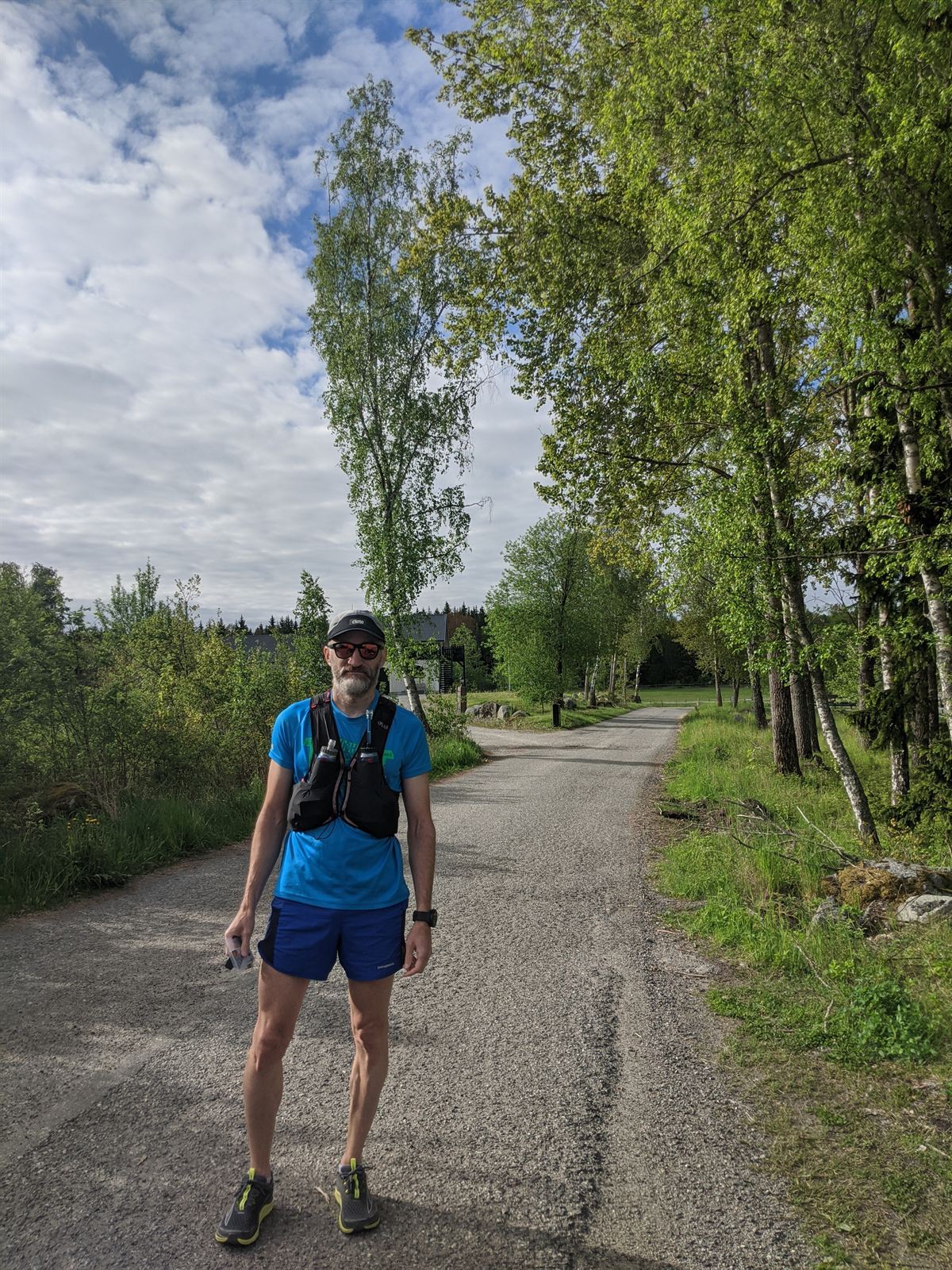
The opening 5 kilometers were surprisingly gnarly: overgrown singletrack, flooded marsh sections, and slippery roots. My tactic was measured: keep the effort controlled early, then open up the stride on the smoother gravel and paved connecting stages.
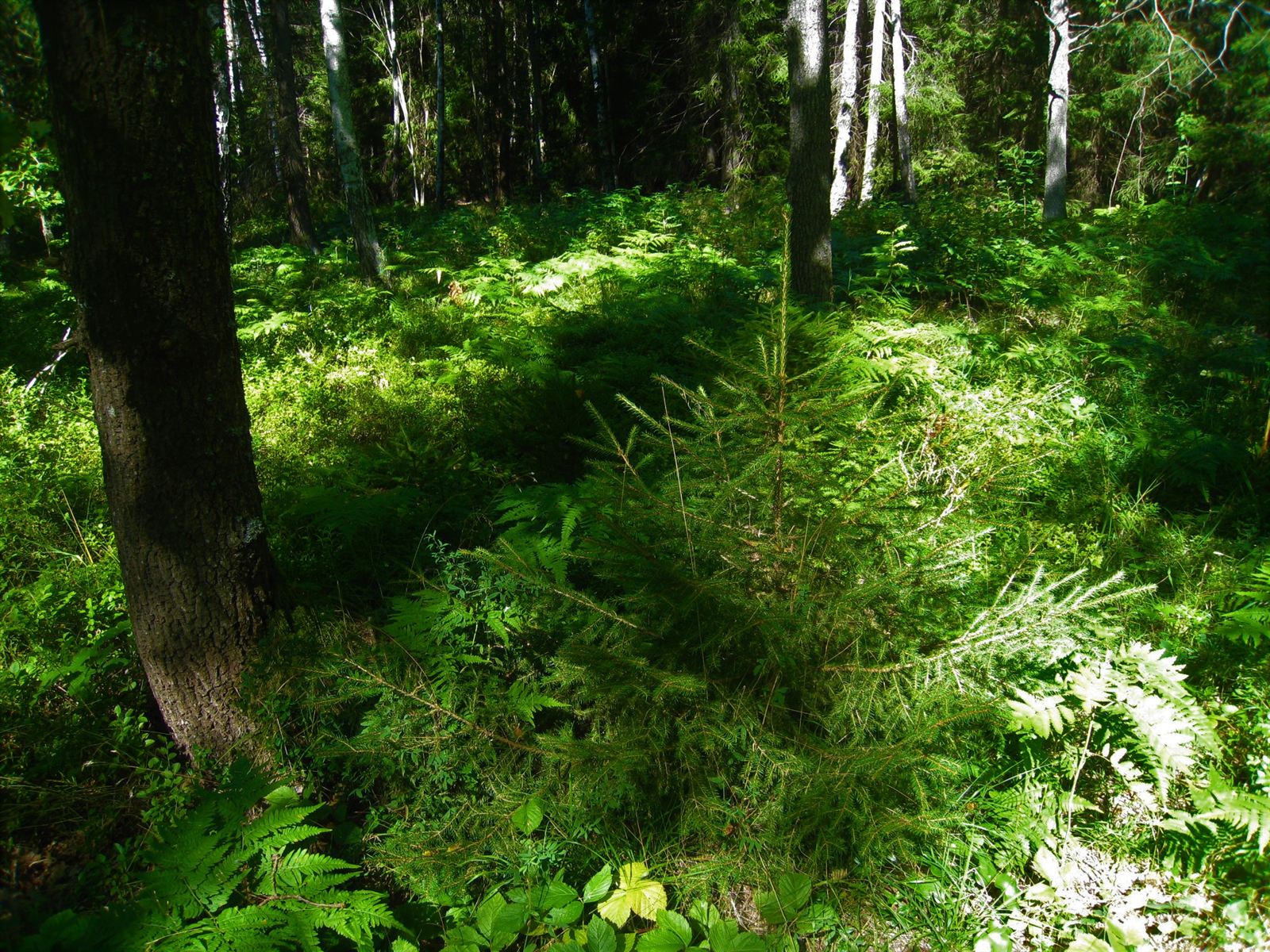
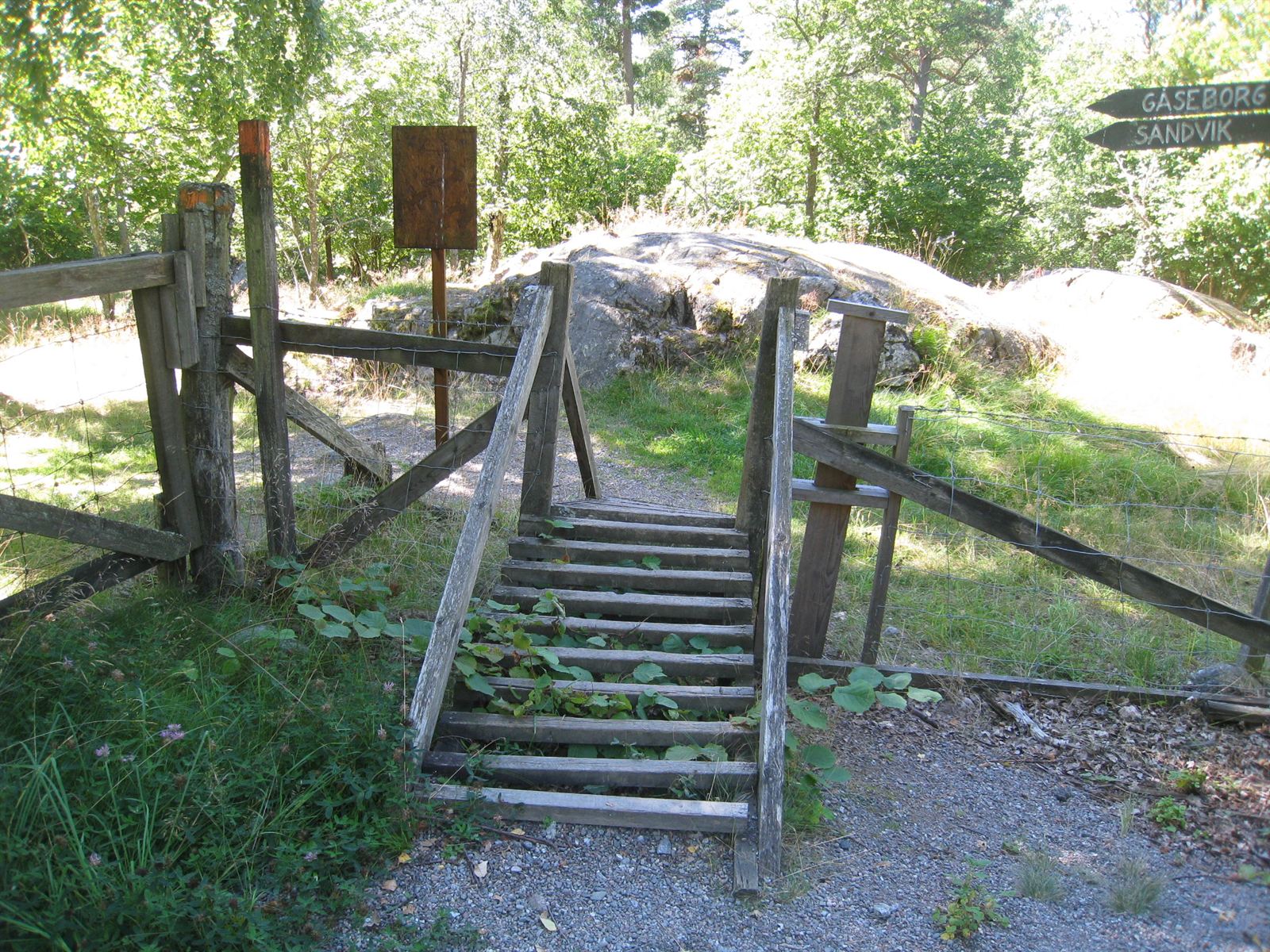
It was a glorious late May morning—crisp air with a gentle tailwind. Miles clicked by smoothly. Right at km 22, I made a quick detour off the trail, vaulted a wooden fence into a pasture of curious cows, and topped off my soft flasks from the water trough.
By 30 km, the splits were looking razor-sharp: I had recouped the early technical minutes and was banking a few seconds per kilometer against my schedule. The legs felt effortless, purring along. But by noon, the summer sun climbed high. Having had zero warm weather since winter, my body wasn't adapted to heat; no matter how much water I sipped, my throat felt like sandpaper.
Passing km 50, the pace started to bite. I filled one final water bottle (totaling roughly 2 liters for 65 km, which was definitely cutting it close). Suddenly, familiar voices broke the silence: my wife and kids had driven out to the trail to cheer me on! Seeing them was an immense emotional lift right as my energy reserves began dipping.
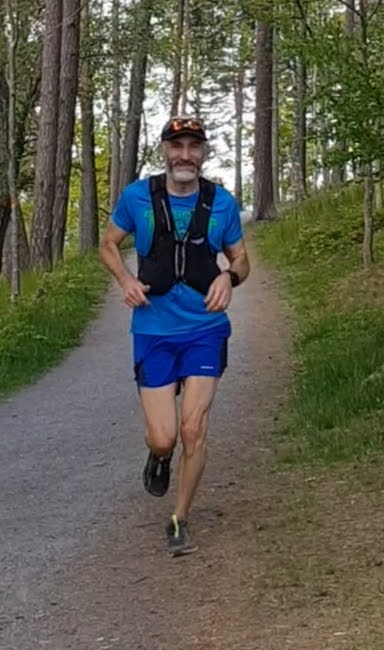
Entering the rugged, rolling terrain of Görväln Nature Reserve, a punchy technical climb pushed my heart rate into the red. Cresting the summit, nausea struck, swiftly followed by a vicious, stabbing stitch in my right side. I dropped to a walk on the climbs, but soon even running the gentle downhills triggered sharp spasms.
The final 10 kilometers were an exercise in sheer grit. Every attempt to restart a running stride sent stabbing pain through my ribs. With 2 km to go, I told myself: “You can run two measly kilometers no matter how bad the stitch is.” Two hundred meters later, I was bent double, gasping for breath. The stitch forced me to shuffle forward like a folded hinge.
Finally, the brick platform of Barkarby commuter rail station appeared through the trees. Hitting the steps and stopping the clock was pure bliss: 05:46:23—establishing the inaugural, verified Unsupported Fastest Known Time on the route!
The beauty of setting an inaugural FKT when you had to walk the final 10 kilometers? It leaves a benchmark that will be delightfully easy to beat next time.